budoorzahera launched in 2026 to carry the light of knowledge to every heart, in every language. Every lesson is available in the original audio with a full synced transcript, translated into fifteen other languages, with translated-audio listening available for a number of them.
You can copy any line of the transcript while listening, download the full text in multiple formats (TXT · SRT · VTT), or share a lesson with someone you care about in one tap. We ask God to make this work beneficial.
4192audio lessons
59complete series
16world languages
Error log
An automatic log of the most recent errors the app ran into on your device — copying and sending it to us helps a lot when troubleshooting a problem.
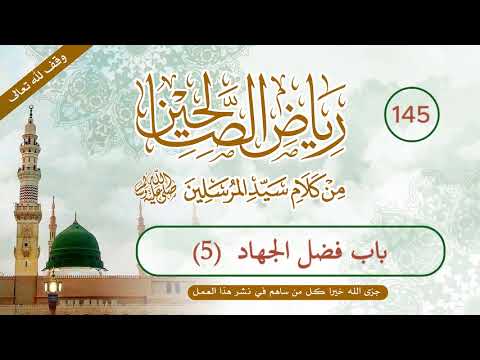
In this episode the sheikh explains the chapter on the virtue of jihad from Riyad as-Salihin, going through hadiths on the virtue of archery, spending, fasting and garrisoning in the way of Allah. He explains the forms of jihad through wealth, self and tongue, and covers rules of warfare, including choosing the right time to fight and the permissibility of deception in war. This episode concludes the completed series.
Key takeaways
The virtue of archery in the way of Allah: whoever shoots an arrow in the way of Allah has the reward equal to freeing a slave.
Spending in the way of Allah is multiplied up to 700 times, according to the hadith.
Whoever dies without having fought or even intended to fight dies with a branch of hypocrisy; the minimum of jihad is occupying one's thoughts and soul with it.
The mujahid is rewarded both on his going and his return, and the return from a campaign is like the campaign itself.
Jihad is done through wealth, self and tongue, and every lawful means may be used to fight the polytheists.
It is recommended to choose a suitable time for battle: a raid in the morning, and a pitched battle after the sun passes its zenith and the winds blow.
Deception is permitted in war, as the hadith says 'war is deception', and sound opinion and consultation are important in it.
Questions & answers
What is the virtue of archery in the way of Allah in Riyad as-Salihin?
The hadith states that whoever shoots an arrow in the way of Allah earns a reward equal to freeing a slave, and it encourages Muslims to engage in jihad and honors it.
Is fasting on the battlefield recommended?
The sheikh notes that some scholars applied hadiths on the virtue of fasting in the way of Allah to fasting on the battlefield, but this reading is not apparent. Fasting on the battlefield that weakens soldiers' strength and energy is not recommended.
What does the hadith 'war is deception' mean?
It means deceiving the disbelievers. It permits deception in war through indirect speech, ambushes and raids, and the use of opinion and consultation, which the sheikh says is even more important than bravery.
How can jihad be carried out through wealth, self and tongue?
Through wealth by providing for the fighters and helping them equip themselves; through self by going out for every able Muslim who carries arms and has no lawful excuse; and through the tongue by supplicating for and praising the fighters and strengthening them.
Auto-generated from the lesson transcript; the lesson itself is the reference.
Transcript
Machine translation — may contain errors
0:00Riyad al-Salihin from the words of the Master of the Messengers, peace and blessings of Allah be upon him.
0:09Chapter: The Virtue of Jihad.
0:14Narrated Salamah Ibn al-Akwa‘, may Allah be pleased with him, who said:
0:20The Prophet, peace and blessings of Allah be upon him, passed by a group of people who were practicing archery.
0:26He said, "Shoot, O children of Isma‘il, for your father was an archer."
0:34Narrated by al-Bukhari.
0:36"Practicing archery" (yantadilun):
0:38Meaning they were shooting arrows at a target to compete.
0:41From the benefits of the hadith:
0:45An ancestor can be referred to as "father."
0:48For the Messenger of Allah, peace and blessings of Allah be upon him, attributed them to Isma‘il, peace be upon him.
0:56Commending one who is skilled in their craft.
0:59By highlighting their excellence.
1:01And comforting the hearts of those who are less skilled.
1:04The excellent character of the Prophet, peace and blessings of Allah be upon him.
1:08And his knowledge of matters of warfare.
1:11The desirability of following the praiseworthy traits of one's forefathers.
1:15And acting upon them.
1:18The excellent manners of the Companions toward the Prophet, peace and blessings of Allah be upon him.
1:23The just leader:
1:25Looks after his Ummah.
1:26And encourages them to learn what benefits them.
1:30And encourages them to learn the arts of war to defend their religion.
1:37Narrated ‘Amr Ibn ‘Abasah, may Allah be pleased with him, who said:
1:41I heard the Messenger of Allah, peace and blessings of Allah be upon him, say:
1:46"Whoever shoots an arrow in the way of Allah,
1:49It is for him equivalent to freeing a slave."
1:52Narrated by Abu Dawud and al-Tirmidhi.
1:57"Equivalent" (‘adl) means equal.
1:59"Freeing a slave" (muharriruhu):
2:01Means the emancipation of a neck.
2:05From the benefits of the hadith:
2:07Encouraging the Muslims to engage in Jihad in the way of Allah.
2:11And glorifying the matter of Jihad and the Mujahidin.
2:17Narrated Abu Yahya,
2:19Quraym Ibn Fatik, may Allah be pleased with him, who said:
2:23The Messenger of Allah, peace and blessings of Allah be upon him, said:
2:27"Whoever spends in the way of Allah,
2:30It is recorded for him seven hundred times over."
2:33Narrated by al-Tirmidhi.
2:35From the benefits of the hadith:
2:38Spending in the way of Allah is multiplied up to seven hundred times.
2:45Narrated Abu Sa‘id, may Allah be pleased with him, who said:
2:49The Messenger of Allah, peace and blessings of Allah be upon him, said:
2:53"There is no servant who fasts one day in the way of Allah,
2:57Except that Allah distances his face from the Fire by that day for seventy years."
3:04Agreed upon.
3:07Narrated Abu Umamah, may Allah be pleased with him,
3:10From the Prophet, peace and blessings of Allah be upon him, who said:
3:14"Whoever fasts one day in the way of Allah,
3:17Allah will place between him and the Fire a trench,
3:21Like that between the heavens and the earth."
3:24Narrated by al-Tirmidhi.
3:26From the benefits of the hadith:
3:31Some scholars interpret this hadith and others like it
3:34As referring to fasting on the battlefields.
3:37However, this is not the apparent meaning.
3:39For fasting, in any case,
3:41Is in the way of Allah.
3:43And the hadith is applied to this.
3:45Fasting on the battlefields of Jihad:
3:48If it affects the strength and energy of the soldiers,
3:52Then it is not recommended.
3:54Narrated Abu Hurayrah, may Allah be pleased with him, who said:
4:00The Messenger of Allah, peace and blessings of Allah be upon him, said:
4:04"Whoever dies without having fought, nor having resolved to fight,
4:09Dies upon a branch of hypocrisy."
4:12Narrated by Muslim.
4:14From the benefits of the hadith:
4:18The leader must urge his subjects to prepare for Jihad.
4:22And not to become accustomed to cowardice and fear of meeting the enemy.
4:28Sincerely resolving to engage in Jihad
4:31Elevates the servant to the station of the people of faith.
4:34And it contains the fact that the least of Jihad
4:37Is occupying one's thoughts and soul with it.
4:40Whoever does not resolve to engage in Jihad and does not fight,
4:44Possesses a trait of hypocrisy.
4:47Narrated Jabir, may Allah be pleased with him, who said:
4:52We were with the Prophet, peace and blessings of Allah be upon him, on a military expedition,
4:57And he said:
4:58"Indeed, in Madinah there are men; you have not traveled a distance,
5:02Nor crossed a valley,
5:04But they were with you."
5:07They were held back by illness.
5:09In another narration: "They were held back by an excuse."
5:13In another narration: "Except that they shared in the reward with you."
5:17Narrated by al-Bukhari from the narration of Anas.
5:22And narrated by Muslim from the narration of Jabir.
5:25And the wording is his.
5:27Narrated Abu Musa, may Allah be pleased with him,
5:30That a Bedouin came to the Prophet, peace and blessings of Allah be upon him, and said:
5:35"O Messenger of Allah,
5:37A man fights for spoils,
5:40A man fights to be remembered,
5:43And a man fights to be seen in his place."
5:46In another narration:
5:48"He fights out of bravery, and he fights out of tribal zeal."
5:52In another narration:
5:54"And he fights out of anger."
5:56"So who is in the way of Allah?"
5:59The Messenger of Allah, peace and blessings of Allah be upon him, said:
6:03"Whoever fights so that the word of Allah may be supreme,
6:08He is in the way of Allah."
6:10Agreed upon.
6:13Narrated ‘Abdullah Ibn ‘Amr Ibn al-‘As, may Allah be pleased with them both, who said:
6:18The Messenger of Allah, peace and blessings of Allah be upon him, said:
6:23"There is no raiding party or army that goes out, takes spoils, and returns safely,
6:30But they have already received two-thirds of their rewards.
6:34And there is no raiding party or army that fails and is afflicted,
6:39But their rewards are complete."
6:42Narrated by Muslim.
6:44From the benefits of the hadith:
6:48If the warriors return safely or take spoils,
6:51Their reward is less than the reward of those who did not return safely, or returned safely but took no spoils.
6:57And that the spoils are in exchange for a portion of the reward of their fighting.
7:02So if they obtain them,
7:04They have received two-thirds of their reward resulting from the fighting.
7:09And these spoils are part of the total reward.
7:14This hadith is in agreement with the authentic, well-known hadiths from the Companions,
7:19In their saying:
7:21"Some of us died and did not consume anything of their reward,
7:25And some of us have had their fruit ripen,
7:29And they are harvesting it."
7:31Meaning: gathering it.
7:33The highest degrees of Jihad:
7:35Is for one who goes out and does not return.
7:38Narrated Abu Umamah, may Allah be pleased with him,
7:42That a man said: "O Messenger of Allah,
7:45Give me permission to travel as a monk."
7:48The Prophet, peace and blessings of Allah be upon him, said:
7:53"The monasticism of my Ummah
7:55Is Jihad in the way of Allah, the Almighty and Majestic."
7:59Narrated by Abu Dawud.
8:01"Monasticism" (siyahah):
8:04Leaving one's homeland and wandering the earth.
8:08From the benefits of the hadith:
8:12Wandering the earth is among the innovations of the Christians,
8:15Like monasticism.
8:17The monasticism of this Ummah
8:19Is guarding the frontiers,
8:21To defend the sanctuary of Islam,
8:24And to protect the community of the Muslims
8:26From the lurking enemies.
8:30Islam transforms prevailing concepts
8:33Into elements of construction and virtue,
8:36And cooperation in righteousness and piety.
8:39Narrated ‘Abdullah Ibn ‘Amr Ibn al-‘As, may Allah be pleased with them both,
8:44From the Prophet, peace and blessings of Allah be upon him, who said:
8:48"Returning is like going out."
8:51Narrated by Abu Dawud.
8:53"Returning" (al-qaflah):
8:55Coming back.
8:56And the intent is:
8:58Returning from the military expedition after its completion.
9:01Its meaning is that he is rewarded for his return after finishing the expedition.
9:08From the benefits of the hadith:
9:10The Mujahid in the way of Allah is rewarded and attains merit in both going and returning.
9:18Narrated al-Sa'ib Ibn Yazid, may Allah be pleased with him, who said:
9:23When the Prophet, peace and blessings of Allah be upon him, returned from the expedition of Tabuk,
9:28The people met him,
9:30And I met him with the children at Thaniyat al-Wada‘.
9:35Narrated by Abu Dawud with this wording.
9:39And it was narrated by al-Bukhari, who said:
9:42"We went to meet the Messenger of Allah, peace and blessings of Allah be upon him, with the children at Thaniyat al-Wada‘."
9:51A "thaniyah" is an elevated place on the earth.
9:56And Thaniyat al-Wada‘ is a place near Madinah to its north.
10:02It was named that because the traveler is seen off and bid farewell there.
10:10From the benefits of the hadith:
10:12The desirability of welcoming the warriors upon their return from military expeditions and Jihad in the way of Allah.
10:19Narrated Abu Umamah, may Allah be pleased with him,
10:23From the Prophet, peace and blessings of Allah be upon him, who said:
10:27"Whoever does not fight, nor equips a warrior,
10:31Nor looks after a warrior's family well in his absence,
10:34Allah will strike him with a calamity before the Day of Resurrection."
10:39Narrated by Abu Dawud.
10:43From the benefits of the hadith:
10:46The prohibition of abandoning Jihad and the severity of the punishment for that.
10:51The obligation of preparation and readiness for military expeditions and Jihad in the way of Allah.
10:56The obligation of preserving the internal front of the Muslim society,
11:01And protecting the honor and families of the Mujahidin in the way of Allah.
11:07The Muslim society is a society of solidarity and cooperation in righteousness and piety,
11:13Because it is like a structure, parts of which strengthen others.
11:18Narrated Anas, may Allah be pleased with him,
11:22That the Prophet, peace and blessings of Allah be upon him, said:
11:26"Strive against the polytheists with your wealth, your lives, and your tongues."
11:32Narrated by Abu Dawud.
11:36From the benefits of the hadith:
11:38Striving against the polytheists by every legitimate means
11:42Is an obligation upon everyone capable.
11:45Jihad is performed with wealth, self, and tongue.
11:49As for wealth:
11:51It is by providing it to the Mujahidin,
11:54And helping them equip themselves to meet the enemies of Allah.
11:59As for the self:
12:01It is the going out of every responsible Muslim capable of carrying weapons,
12:06Who is not excused by a legal excuse that permits him to refrain from meeting the enemy.
12:12As for the tongue:
12:15It is by supplication and praising the Mujahidin,
12:19and inciting them and working to keep them steadfast.
12:23It is forbidden to provide the enemies of Islam with money or manpower.
12:27Likewise, it is forbidden to praise them or boast about them.
12:31Rather, one must condemn them and belittle their status.
12:35And one must expose their evil traits by every possible means.
12:39On the authority of Abu 'Amr,
12:43also known as Abu Hakim,
12:45al-Nu'man ibn Muqarrin, may Allah be pleased with him, who said:
12:49"I witnessed the Messenger of Allah, peace and blessings of Allah be upon him;
12:53if he did not fight at the beginning of the day,
12:57he would delay the fighting until the sun had passed its zenith,
13:00the winds began to blow, and victory descended."
13:04Narrated by Abu Dawud and al-Tirmidhi.
13:07Among the benefits of the hadith:
13:11The permissibility of delaying fighting until the latter part of the day.
13:16It is recommended for an army commander to choose appropriate times
13:20when the soldiers are at their full strength and vigor,
13:25so that their efforts may be multiplied and their engagement improved.
13:29If it is a surprise raid,
13:31it is preferred that it be in the morning.
13:34But if it is a direct confrontation,
13:36then it should be after the sun has passed its zenith and the winds have begun to blow.
13:40On the authority of Abu Hurayrah, may Allah be pleased with him, who said:
13:46The Messenger of Allah, peace and blessings of Allah be upon him, said:
13:50"Do not wish to meet the enemy,
13:53and ask Allah for well-being.
13:55But if you do meet them, then be steadfast."
13:59Agreed upon.
14:01On the authority of Abu Hurayrah, may Allah be pleased with him,
14:04and on the authority of Jabir ibn 'Abdullah, may Allah be pleased with them both,
14:08that the Prophet, peace and blessings of Allah be upon him, said:
14:12"War is deception."
14:15Agreed upon.
14:18"Deception" means outwitting the disbelievers.
14:23Among the benefits of the hadith:
14:25The encouragement to exercise caution in war.
14:30The recommendation to deceive the disbelievers to catch them off guard.
14:34This is done through indirect speech, ambushes, and surprise raids.
14:38The permissibility of using strategy and consultation in war.
14:42Indeed, it is even more vital than mere bravery.