budoorzahera launched in 2026 to carry the light of knowledge to every heart, in every language. Every lesson is available in the original audio with a full synced transcript, translated into fifteen other languages, with translated-audio listening available for a number of them.
You can copy any line of the transcript while listening, download the full text in multiple formats (TXT · SRT · VTT), or share a lesson with someone you care about in one tap. We ask God to make this work beneficial.
4192audio lessons
59complete series
16world languages
Error log
An automatic log of the most recent errors the app ran into on your device — copying and sending it to us helps a lot when troubleshooting a problem.
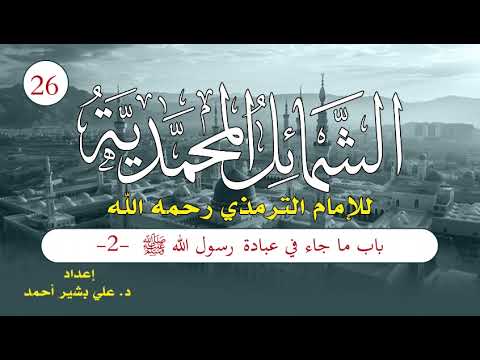
Al-Shamail Al-Muhammadiya | Episode (26) | Chapter on what was mentioned regarding the worship of the Messenger of God, peace and blessings of God be upon him -2
This lesson covers the chapter on the worship of the Messenger of Allah ﷺ as recorded in the Shama'il Muhammadiyya. It presents the hadith of Hudhayfah رضي الله عنه describing the length of the Prophet's ﷺ standing, bowing and prostration during night prayer, then explains some of his practices of praying while seated and his commitment to consistent good deeds. The sheikh also explains the regular Sunnah prayers the Prophet ﷺ maintained, including the two rak'ahs before Fajr and what is reported about Duha and the four rak'ahs before Asr. The lesson concludes the Shama'il Muhammadiyya series.
Key takeaways
The Prophet's ﷺ night prayer was very long in standing, bowing and prostration, and he repeated the glorification of his Lord out of reverence for Allah.
Repeating and reflecting on a single verse is better than completing the Qur'an without understanding, as the sheikh quotes from Ibn al-Qayyim رحمه الله.
Performing voluntary prayer in congregation occasionally is permissible, and opposing the imam is considered a bad matter.
The Prophet ﷺ prayed seated in the last part of his life; he was exempt from the reduced reward for seated prayer, as in the hadith of Ibn Umar رضي الله عنهما.
The Prophet ﷺ loved to be consistent in deeds, as he said that the most beloved deed to Allah is the most consistent even if small.
The regular Sunnah prayers are explained in detail, and praying the Sunnah at home is virtuous.
The lesson refers to the Duha prayer and the virtue of praying four rak'ahs before Asr, with explanation of the greeting between each two rak'ahs.
Questions & answers
Which regular Sunnah prayers did the Prophet ﷺ maintain?
According to the hadith of Ibn Umar رضي الله عنهما cited by the sheikh, there are ten rak'ahs: two before Dhuhr, two after it, two after Maghrib at home, two after Isha at home, and two before Fajr.
Did the Prophet ﷺ pray while seated?
Yes, in the final period of his life, after he grew old and frail, as narrated by Aisha and Hafsah رضي الله عنهما. He would recite while seated and then stand to bow when about thirty or forty verses remained.
What is the lesson about repeating a verse in prayer?
The sheikh notes that the Prophet ﷺ spent a whole night repeating one verse in bowing and prostration. He explains that reciting a verse with reflection and understanding is better than finishing the Qur'an without it, and is more beneficial for the heart, as was the practice of the early scholars.
Auto-generated from the lesson transcript; the lesson itself is the reference.
Qur’an verses cited in this lesson
Al-Ma'idah 5:118 — If Thou punish them, lo! they are Thy slaves, and if Thou forgive them (lo! they are Thy slaves). Lo! Thou, only Thou, art the Mighty, the Wise.
Verses are matched automatically against the Qur’an text; some mentions may be missed. English: Pickthall.
Transcript
Machine translation — may contain errors
0:00In the name of Allah, the Most Gracious, the Most Merciful.
0:07With pens of longing,
0:09And the ink of love,
0:11We record lines more precious than gold,
0:15In describing the Master of Creation,
0:17Peace and blessings of Allah be upon him.
0:20The Prophetic characteristics (Shama'il).
0:31Chapter: What has been narrated regarding the prayer of the Messenger of Allah, peace be upon him.
0:38On the authority of Hudhayfah ibn al-Yaman, may Allah be pleased with them both,
0:41That he prayed with the Prophet, peace be upon him, at night.
0:46He said: When he entered into the prayer, he said:
0:50"Allah is the Greatest, Possessor of the Kingdom, the Might, the Pride, and the Grandeur."
0:56Then he recited [Surah] al-Baqarah.
0:58Then he bowed.
1:00His bowing was approximately as long as his standing.
1:03And he would say:
1:05"Glory be to my Lord, the Almighty."
1:07"Glory be to my Lord, the Almighty."
1:10Then he raised his head.
1:12His standing [after bowing] was approximately as long as his bowing.
1:15And he would say:
1:17"To my Lord belongs all praise."
1:19"To my Lord belongs all praise."
1:21Then he prostrated.
1:22His prostration was approximately as long as his standing.
1:26And he would say:
1:28"Glory be to my Lord, the Most High."
1:30"Glory be to my Lord, the Most High."
1:32Then he raised his head.
1:34His sitting between the two prostrations was approximately as long as his prostration.
1:38And he would say:
1:40"My Lord, forgive me."
1:42"My Lord, forgive me."
1:44Until he had recited al-Baqarah,
1:46And Ali 'Imran,
1:48And an-Nisa',
1:49And al-Ma'idah or al-An'am.
1:51Shu'bah is the one who doubted between al-Ma'idah and al-An'am.
1:55In this hadith,
1:59It is mentioned that Hudhayfah, may Allah be pleased with him,
2:01Prayed with the Prophet, peace be upon him, at night.
2:05Perhaps this was during the month of Ramadan,
2:09According to the narration in the Musnad of Ahmad.
2:12And his saying:
2:13"When the Prophet, peace be upon him, entered into the prayer,"
2:17Meaning, he intended to begin it.
2:20He said:
2:21"Allah is the Greatest, Possessor of the Kingdom, the Might, the Pride, and the Grandeur."
2:27These are all descriptions of glorification for Allah, the Almighty and Exalted.
2:33For He is the Possessor of the Kingdom, the Might, the Pride, and the Grandeur.
2:38The Kingdom (Malakut) is derived from Sovereignty (Mulk).
2:40And the Might (Jabarut) is derived from Compulsion (Jabr).
2:42So He, the Almighty and Exalted, is the Sovereign, the Compeller.
2:46And his saying:
2:47"Then he recited al-Baqarah,"
2:49Meaning, the entire surah.
2:51"Then he bowed,"
2:52"His bowing was approximately as long as his standing."
2:55And he would say:
2:57"Glory be to my Lord, the Almighty."
2:59"Glory be to my Lord, the Almighty."
3:01This indicates the length of his bowing, peace be upon him.
3:05And he would repeat "Glory be to my Lord, the Almighty,"
3:09In glorification of the Lord, may His Majesty be exalted,
3:12Because bowing is the place for glorifying Allah.
3:15And his saying:
3:16"Then he raised his head,"
3:18"His standing was approximately as long as his bowing,"
3:22Meaning that the upright posture after bowing,
3:25He would stand in it for a long time, similar to the bowing.
3:29And he would say:
3:31"To my Lord belongs all praise."
3:34"Then he prostrated,"
3:36"His prostration was approximately as long as his standing."
3:39And he would say:
3:41"Glory be to my Lord, the Most High."
3:44Meaning, he would repeat that during his long prostration.
3:48"Then he raised his head,"
3:50"His sitting between the two prostrations was approximately as long as his prostration."
3:54And he would say:
3:56"My Lord, forgive me."
3:58Until he had recited al-Baqarah,
4:00And Ali 'Imran,
4:02And an-Nisa',
4:03And al-Ma'idah,
4:04Or al-An'am.
4:06Meaning, he recited these surahs,
4:08In four rak'ahs.
4:10And the statement of
4:11Shu'bah, who doubted between al-Ma'idah and al-An'am,
4:14Means he was unsure which of the two surahs was mentioned in the hadith.
4:18And on the authority of 'A'ishah, may Allah be pleased with her, she said:
4:24The Messenger of Allah, peace be upon him, stood
4:27With a verse from the Qur'an
4:29One night.
4:31In this hadith,
4:34It is stated that the Prophet, peace be upon him,
4:36Stood with a single verse from the Qur'an
4:39For an entire night.
4:41It is narrated in the Musnad of Imam Ahmad,
4:44From the hadith of Abu Dharr, may Allah be pleased with him,
4:47That the Prophet, peace be upon him,
4:50Prayed one night,
4:52And he recited a verse until morning,
4:55Bowing with it and prostrating with it.
4:58“If Thou punish them, lo! they are Thy slaves, and if Thou forgive them (lo! they are Thy slaves). Lo! Thou, only Thou, art the Mighty, the Wise.” (5:118)
5:02“If Thou punish them, lo! they are Thy slaves, and if Thou forgive them (lo! they are Thy slaves). Lo! Thou, only Thou, art the Mighty, the Wise.” (5:118)
5:08This indicates the legitimacy of repeating a single verse,
5:12Or a single surah,
5:14In a single rak'ah or in a single night.
5:18Ibn al-Qayyim, may Allah have mercy on him, said:
5:21"If people knew what lies in reciting the Qur'an with contemplation,
5:25They would busy themselves with it to the exclusion of all else."
5:28So if one recites it with reflection,
5:31And passes by a verse that he is in need of,
5:34For the healing of his heart,
5:36He should repeat it, even a hundred times,
5:38Or for an entire night.
5:40For reciting a verse with reflection and understanding
5:43Is better than reciting the entire Qur'an
5:45Without contemplation and understanding,
5:48And it is more beneficial for the heart,
5:50And more conducive to attaining faith,
5:52And tasting the sweetness of the Qur'an.
5:54This was the habit of the salaf,
5:57One of them would repeat a verse until the morning.
6:00And on the authority of 'Abdullah ibn Mas'ud, may Allah be pleased with him, he said:
6:06I prayed one night with the Messenger of Allah, peace be upon him,
6:11And he remained standing,
6:14Until I contemplated a bad thing.
6:17It was said to him:
6:18"And what did you contemplate?"
6:20He said:
6:21"I contemplated sitting down and leaving the Prophet, peace be upon him."
6:25In this hadith,
6:29There is an explanation of the length of the Prophet's prayer at night,
6:34And that there is no harm in praying in congregation for voluntary prayers occasionally.
6:39And it also contains that opposing the Imam
6:42Is considered among the bad things.
6:45That is why he, may Allah be pleased with him, said:
6:47"I contemplated a bad thing."
6:49When it was said to him:
6:51"And what did you contemplate?"
6:53He said:
6:54"I contemplated sitting down and leaving the Prophet, peace be upon him."
6:59This could mean several things:
7:02Among them,
7:03That he would sit and complete his prayer while sitting,
7:06And leave the Prophet, peace be upon him, to pray while standing.
7:11Or that he would abandon the prayer,
7:13And leave the Prophet, peace be upon him, to pray alone.
7:18Or that he intended to break the following of the Imam,
7:20And complete his prayer individually,
7:23And leave the Prophet, peace be upon him, to complete it alone.
7:28And on the authority of 'A'ishah, may Allah be pleased with her,
7:32That the Prophet, peace be upon him, used to pray while sitting,
7:37And he would recite while he was sitting.
7:39Then, when there remained of his recitation about thirty or forty verses,
7:45He would stand and recite while standing,
7:48Then he would bow and prostrate.
7:50Then he would do the same in the second rak'ah.
7:55In this hadith,
7:58It is shown that the Prophet, peace be upon him, used to pray while sitting,
8:03And this was only in the latter part of his life after he had aged,
8:08As 'A'ishah, may Allah be pleased with her, said:
8:11That she never saw the Messenger of Allah, peace be upon him, pray the night prayer sitting down at all,
8:18Until he grew old.
8:20So he would recite while sitting,
8:22Until, when he wanted to bow,
8:25He would stand and recite about thirty or forty verses,
8:30Then he would bow.
8:32It is possible that the Prophet, peace be upon him, prayed while sitting
8:36Due to fatigue, illness, old age, or something similar.
8:41And on the authority of 'Abdullah ibn Shaqiq, he said:
8:45I asked 'A'ishah, may Allah be pleased with her,
8:48About the prayer of the Messenger of Allah, peace be upon him, regarding his voluntary prayers.
8:54She said:
8:55"He used to pray for a long night while standing,
8:59And for a long night while sitting.
9:02If he recited while standing,
9:04He would bow and prostrate while standing.
9:07And if he recited while sitting,
9:09He would bow and prostrate while sitting."
9:13In this hadith,
9:16'A'ishah, may Allah be pleased with her, describes
9:18The prayer of the Prophet, peace be upon him, at night.
9:22She says:
9:24"He used to pray for a long night while standing,"
9:27"If he recited while standing,"
9:30"He would bow and prostrate while standing."
9:33Meaning that if he began the recitation while standing,
9:37He would bow from the standing position and prostrate from the standing position.
9:41"And sometimes he would pray for a long night while sitting,"
9:45Meaning that if he began the recitation while sitting,
9:49He would bow and prostrate while sitting.
9:52This hadith may be reconciled with
9:55The previous hadith of 'A'ishah, which states:
9:58"And he would recite while sitting,
10:00Until, when he wanted to bow,
10:03He would stand and recite about thirty or forty verses,
10:07Then he bowed.
10:09Ibn Hajar, may Allah have mercy on him, said:
10:13This is understood to refer to his initial state,
10:16before he reached old age,
10:18as a way to reconcile the two hadiths.
10:21As for a man’s prayer while sitting,
10:23its reward is half that of a man’s prayer while standing.
10:27However, the Prophet, peace and blessings of Allah be upon him,
10:30is an exception to this,
10:32for his prayer while sitting
10:34does not have its reward diminished compared to his prayer while standing,
10:38based on what Muslim recorded in his Sahih,
10:41in the hadith of ‘Abdullah Ibn ‘Umar, may Allah be pleased with them both,
10:44who said:
10:46"I was told that the Messenger of Allah, peace and blessings of Allah be upon him, said:
10:50'The prayer of a man while sitting
10:53is half of the prayer.'"
10:55He said:
10:56"I went to him and found him praying while sitting,
11:00so I placed my hand on his head,
11:02and he said:
11:03'What is the matter with you, O ‘Abdullah Ibn ‘Umar?'
11:06I said:
11:07'I was told, O Messenger of Allah, that you said:
11:10"The prayer of a man while sitting is half of the prayer,"
11:14yet you are praying while sitting.'
11:17He said:
11:18'Indeed,
11:19but I am not like any one of you.'"
11:22Thus, this is counted among his specific characteristics, peace and blessings of Allah be upon him.
11:27On the authority of Hafsah, the wife of the Prophet, peace and blessings of Allah be upon him, she said:
11:33"The Messenger of Allah, peace and blessings of Allah be upon him, used to pray his voluntary prayer while sitting,
11:40and he would recite a surah and chant it (with tartil),
11:43until it would be longer than a surah longer than it."
11:47In this hadith,
11:50Hafsah, the Mother of the Believers, may Allah be pleased with her, says
11:54that the Messenger of Allah, peace and blessings of Allah be upon him, used to pray his voluntary prayer while sitting.
12:01The intended meaning of "subhah" here is the voluntary prayer (nafilah),
12:04for the voluntary prayer is called "subhah"
12:07because of the glorification (tasbih) it contains.
12:10The Messenger of Allah, peace and blessings of Allah be upon him, used to pray his voluntary prayer while sitting,
12:15and that was at the end of his life when he became heavy (with age).
12:19And her statement:
12:21"And he would recite a surah and chant it,
12:24until it would be longer than a surah longer than it,"
12:27means he would recite the surah slowly and reflectively,
12:31until a short surah, when recited with tartil,
12:34becomes longer than a long surah (recited quickly).
12:38On the authority of Abu Salamah Ibn ‘Abd al-Rahman,
12:44that ‘A’ishah, may Allah be pleased with her, informed him
12:47that the Prophet, peace and blessings of Allah be upon him, did not die
12:51until most of his prayer was while he was sitting.
12:55In this hadith,
12:58(it is indicated) that the Prophet, peace and blessings of Allah be upon him,
13:01used to perform most of his prayer while sitting,
13:04and that was near the time of his death,
13:07because he had grown old and heavy.
13:09He only did that, peace and blessings of Allah be upon him,
13:13because he loved to be consistent in his deeds,
13:17as "The most beloved deed to Allah is the most consistent, even if it is small."
13:21On the authority of Ibn ‘Umar, may Allah be pleased with them both, he said:
13:27"I prayed with the Messenger of Allah, peace and blessings of Allah be upon him,
13:31two rak‘ahs before Dhuhr,
13:33and two rak‘ahs after it,
13:35and two rak‘ahs after Maghrib in his house,
13:39and two rak‘ahs after ‘Isha’ in his house."
13:44In the preceding hadiths of this chapter,
13:47the prayer of the Prophet, peace and blessings of Allah be upon him,
13:50was during the night prayer (qiyam al-layl),
13:52and in the upcoming hadiths,
13:54there is an explanation of the regular Sunnah prayers (rawatib).
13:57His statement, "I prayed with the Messenger of Allah, peace and blessings of Allah be upon him,"
14:01the "companionship" intended in this hadith
14:05means merely following his example, peace and blessings of Allah be upon him,
14:08in the prayer.
14:10Ibn ‘Umar prayed two rak‘ahs by himself,
14:13just as the Prophet, peace and blessings of Allah be upon him,
14:15prayed two rak‘ahs.
14:17It will also be mentioned from Ibn ‘Umar
14:19the mention of two rak‘ahs before Fajr.
14:22These are ten rak‘ahs called the regular Sunnah prayers.
14:26And it will come from the hadith of ‘A’ishah, may Allah be pleased with her,
14:30that he, peace and blessings of Allah be upon him,
14:33used to pray four before Dhuhr.
14:36Some scholars have interpreted this as referring to two different states:
14:40sometimes he would pray four,
14:42as ‘A’ishah narrated,
14:44and sometimes he would pray two,
14:47as Ibn ‘Umar, may Allah be pleased with them both, narrated.
14:50The hadith also contains the virtue of praying the Sunnah in the house.
14:55On the authority of Ibn ‘Umar, may Allah be pleased with them both,
15:00he said:
15:01"Hafsah told me
15:03that the Messenger of Allah, peace and blessings of Allah be upon him,
15:06used to pray two rak‘ahs when the dawn broke
15:10and the caller called out."
15:12Ayyub said,
15:14and he narrated that he said: "two light rak‘ahs."
15:17In this hadith,
15:20we mentioned the prayer of the Prophet, peace and blessings of Allah be upon him,
15:23before the Fajr prayer,
15:25and it is the completion of the ten rak‘ahs.
15:28Ibn ‘Umar, may Allah be pleased with them both,
15:31saw the Prophet, peace and blessings of Allah be upon him,
15:33praying eight rak‘ahs,
15:36and his sister Hafsah, the wife of the Prophet, peace and blessings of Allah be upon him, informed him
15:40about the regular Sunnah of Fajr,
15:42because he used to pray it in his house,
15:45so it became ten.
15:47And these two rak‘ahs,
15:49the Muslim prays them after the dawn breaks
15:52and after the caller calls for prayer.
15:55The Sunnah regarding them is to pray them lightly,
15:59so one should not prolong them.
16:01The Sunnah regarding them also
16:03is to recite in the first
16:05"Say, 'O disbelievers,'"
16:07and in the second, "Say, 'He is Allah, [who is] One.'"
16:11On the authority of Ibn ‘Umar, may Allah be pleased with them both, he said:
16:15"I memorized from the Messenger of Allah, peace and blessings of Allah be upon him,
16:19eight rak‘ahs:
16:21two rak‘ahs before Dhuhr,
16:23two rak‘ahs after it,
16:25two rak‘ahs after Maghrib,
16:28and two rak‘ahs after ‘Isha’."
16:31Ibn ‘Umar said:
16:33"And Hafsah told me about the two rak‘ahs of the morning,
16:36which I did not see from the Prophet, peace and blessings of Allah be upon him."
16:42On the authority of ‘Abdullah Ibn Shaqiq, he said:
16:45"I asked ‘A’ishah, may Allah be pleased with her,
16:48about the prayer of the Messenger of Allah, peace and blessings of Allah be upon him."
16:52She said:
16:54"He used to pray two rak‘ahs before Dhuhr,
16:57two rak‘ahs after it,
16:59two rak‘ahs after Maghrib,
17:01two rak‘ahs after ‘Isha’,
17:04and two before Fajr."
17:07On the authority of ‘Asim Ibn Damrah, he said:
17:11"We asked ‘Ali, may Allah be pleased with him,
17:14about the prayer of the Messenger of Allah, peace and blessings of Allah be upon him, during the day."
17:19He said:
17:21"You would not be able to bear that."
17:24He said:
17:25"We said:
17:26'Whoever among us is able to bear it will pray it.'"
17:29He said:
17:31"When the sun was here,
17:34like its position here at ‘Asr,
17:37he would pray two rak‘ahs.
17:39And when the sun was here,
17:42like its position here at Dhuhr,
17:45he would pray four.
17:47He would pray four before Dhuhr,
17:50and two after it.
17:52He would pray four before ‘Asr,
17:54separating every two rak‘ahs with the taslim upon the close angels, the prophets, and those who follow them among the believers and the Muslims."
18:05In this hadith, some of the Tabi‘un asked ‘Ali, may Allah be pleased with him, about the prayer of the Messenger of Allah, peace and blessings of Allah be upon him, during the day.
18:17This question from them was for the sake of following his example, not merely for the sake of knowledge.
18:22That is why he said to them, "You would not be able to bear that,"
18:27meaning you would not be able to maintain and persist in that.
18:32They said, "Whoever among us is able to bear it will pray it,"
18:37meaning we desire to know it,
18:40so whoever among us is able to bear it will pray it and win its reward and recompense.
18:46‘Ali, may Allah be pleased with him, said to them:
18:49"When the sun was here," meaning from the east, "like its position here at ‘Asr,"
18:58meaning from the direction of the west at ‘Asr,
19:01meaning if the position of the sun while it is in the east is like its position when it is in the west at ‘Asr,
19:10he would pray two rak‘ahs.
19:11And his statement, "And when the sun was here,"
19:15meaning from the east,
19:17"like its position here at Dhuhr,"
19:19meaning before the sun passes the meridian (zawal),
19:21he would pray four.
19:23All of this is regarding the Duha prayer.
19:26And his statement:
19:29"He would pray four before Dhuhr,"
19:31meaning he would pray four rak‘ahs after the Dhuhr adhan,
19:35and this is the regular Sunnah of Dhuhr.
19:38And his statement, "and two after it,"
19:41this is the post-Dhuhr regular Sunnah.
19:44"And four before ‘Asr,"
19:46meaning he would pray four rak‘ahs before ‘Asr,
19:50and these are not among the regular Sunnah prayers,
19:53but a great virtue has been reported regarding them.
19:56It has been reported from Ibn ‘Umar, may Allah be pleased with them both,
20:00that the Prophet, peace and blessings of Allah be upon him, said:
20:03"May Allah have mercy on a person who prays four before ‘Asr."
20:08And his statement:
20:10"Separating every two rak‘ahs with the taslim upon the close angels,
20:15the prophets,
20:17and those who follow them among the believers and the Muslims,"
20:21it is possible that what is intended by this is what is mentioned in the Tashahhud,
20:25and it is possible that what is intended is the taslim (the final greeting),
20:29meaning he would perform the taslim to his right and to his left,
20:33and this is the clearest and most likely interpretation.
20:36The hadith has more to follow, if Allah wills.
20:40And Allah knows best.
20:42May the peace and blessings of Allah be upon our Prophet Muhammad,
20:45And upon all of his family and his Companions.