budoorzahera launched in 2026 to carry the light of knowledge to every heart, in every language. Every lesson is available in the original audio with a full synced transcript, translated into fifteen other languages, with translated-audio listening available for a number of them.
You can copy any line of the transcript while listening, download the full text in multiple formats (TXT · SRT · VTT), or share a lesson with someone you care about in one tap. We ask God to make this work beneficial.
4192audio lessons
59complete series
16world languages
Error log
An automatic log of the most recent errors the app ran into on your device — copying and sending it to us helps a lot when troubleshooting a problem.
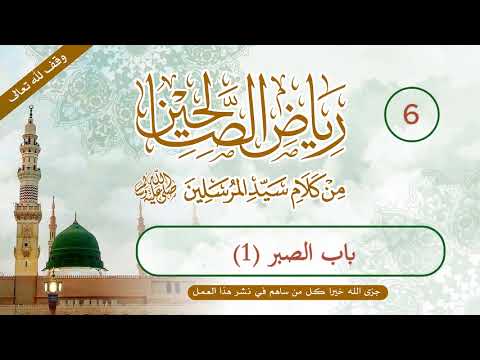
This lesson explains the chapter on patience from Riyad as-Salihin. It begins with Quranic verses on the virtue of patience and the reward promised to the patient, then the hadith of Abu Malik al-Ash'ari (may Allah be pleased with him) in which the Prophet ﷺ says patience is a light. It also covers the hadith of Abu Sa'id al-Khudri (may Allah be pleased with him) on abstaining from asking people and seeking patience, and the hadith of Suhayb (may Allah be pleased with him) on the wonder of the believer's affair. It closes with accounts from the Prophet's ﷺ final illness and the death of his grandson, showing patience and mercy.
Key takeaways
Patience is among the qualities Allah praised, and He gave the patient glad tidings of a reward without measure.
Patience is a light by which darkness and distress are removed, as the Prophet ﷺ stated in the hadith of Abu Malik al-Ash'ari (may Allah be pleased with him).
Whoever seeks patience, Allah grants them patience, and no one has been given a better or wider gift than patience.
Abstaining from asking people and finding richness in the soul are qualities of the believer; true wealth is the wealth of the soul, not abundance of possessions.
The believer's affair is entirely good: if ease reaches him he is grateful and that is good for him, and if hardship reaches him he is patient and that is good for him.
The prophets are the most tested people in life and at death, to raise their ranks, and what comes after this world is better for them and their followers.
Mercy toward creation brings Allah's mercy, while a hardened heart prevents it; the Prophet ﷺ wept at the death of his daughter's son and said this is a mercy Allah places in the hearts of whom He wills.
Questions & answers
What is the virtue of patience in Islam?
The lesson explains that Allah gave the patient glad tidings and that their reward will be given without reckoning, and that patience is a light which removes darkness and distress, as stated in the hadith of Abu Malik al-Ash'ari (may Allah be pleased with him).
What does abstaining from asking and seeking patience mean in the hadith of Abu Sa'id al-Khudri?
The lesson explains that whoever abstains from asking people, Allah keeps them chaste; whoever seeks richness, Allah makes them rich; and whoever seeks patience, Allah grants them patience. True richness is richness of the soul.
Why did the Prophet ﷺ say 'How wondrous is the affair of the believer'?
The lesson explains that the believer's affair is entirely good: if ease reaches them they give thanks, which is good for them, and if hardship reaches them they are patient, which is also good for them. This is unique to the believer.
What is the lesson from the Prophet ﷺ weeping at the death of his daughter's son?
The lesson explains that this weeping was a mercy Allah places in the hearts of His servants, that Allah has mercy on those who are merciful, and that crying without wailing is permissible.
Auto-generated from the lesson transcript; the lesson itself is the reference.
Qur’an verses cited in this lesson
Al-Baqarah 2:153 — O ye who believe! Seek help in steadfastness and prayer. Lo! Allah is with the steadfast.
Al-Baqarah 2:155 — And surely We shall try you with something of fear and hunger, and loss of wealth and lives and crops; but give glad tidings to the steadfast,
Az-Zumar 39:10 — Say: O My bondmen who believe! Observe your duty to your Lord. For those who do good in this world there is good, and Allah's earth is spacious. Verily the steadfast will be paid their wages without stint.
Ash-Shura 42:43 — And verily whoso is patient and forgiveth - lo! that, verily, is (of) the steadfast heart of things.
Muhammad 47:31 — And verily We shall try you till We know those of you who strive hard (for the cause of Allah) and the steadfast, and till We test your record.
Verses are matched automatically against the Qur’an text; some mentions may be missed. English: Pickthall.
Transcript
Machine translation — may contain errors
0:00*Riyadh al-Salihin* from the Words of the Master of the Messengers, peace and blessings of Allah be upon him.
0:09Chapter on Patience.
0:16Allah the Exalted said:
0:18"O you who have believed, persevere, endure, and remain stationed."
0:23And He said:
0:25“And surely We shall try you with something of fear and hunger, and loss of wealth and lives and crops; but give glad tidings to the steadfast,” (2:155)
0:34"And give glad tidings to the patient."
0:36And the Exalted said:
0:38“Say: O My bondmen who believe! Observe your duty to your Lord. For those who do good in this world there is good, and Allah's earth is spacious. Verily the steadfast will be paid their wages without stint.” (39:10)
0:43And the Exalted said:
0:45“And verily whoso is patient and forgiveth - lo! that, verily, is (of) the steadfast heart of things.” (42:43)
0:51And the Exalted said:
0:53“O ye who believe! Seek help in steadfastness and prayer. Lo! Allah is with the steadfast.” (2:153)
0:59And the Exalted said:
1:01“And verily We shall try you till We know those of you who strive hard (for the cause of Allah) and the steadfast, and till We test your record.” (47:31)
1:08The verses enjoining patience and expounding its virtue are numerous and well known.
1:14On the authority of Abu Malik al-Harith ibn 'Asim al-Ash'ari (may Allah be pleased with him), who said:
1:21The Messenger of Allah (peace and blessings of Allah be upon him) said:
1:25"Purification is half of faith,
1:28and 'Praise be to Allah' (*al-hamdulillah*) fills the scale,
1:31and 'Glory be to Allah and praise be to Allah' (*subhan Allah wa al-hamdulillah*)
1:34fill—or fills—what is between the heavens and the earth.
1:38Prayer is light,
1:40charity is proof,
1:42patience is an illuminating radiance,
1:44and the Qur'an is an argument for you or against you.
1:48Every person goes out in the morning,
1:50selling his soul, either freeing it or destroying it."
1:55Related by Muslim.
1:57"Purification" (*al-tuhur*):
2:00What is meant is the act of ritual purification.
2:03"Half" (*shatr*), meaning one half.
2:06"Fills the scale":
2:08That is, it fills the scale on which deeds are weighed.
2:12"Prayer is light":
2:14Meaning a light that illuminates the path of truth for its performer in this worldly life,
2:18and illuminates the Traverse (*al-Sirat*) in the Hereafter when crossing over it.
2:22"Charity is proof":
2:25Meaning clear evidence of the faith of the one who gives it.
2:29"Patience is an illuminating radiance":
2:31Radiance (*diya'*) denotes intense light,
2:33and through patience, darknesses and afflictions are dispelled.
2:37"Either freeing it":
2:39Meaning delivering it from punishment.
2:42"Or destroying it":
2:44Meaning ruining it through committing sins, estrangement, and deprivation.
2:49Among the lessons derived from the hadith:
2:53The virtue of ablution (*wudu'*) in Islam,
2:55and it is a prerequisite for the validity of prayer,
2:58thus it stands as half of it.
3:00Deeds will possess weight on the Day of Resurrection,
3:04growing heavy or light,
3:06and this affirms the reality of the Scale.
3:08Clarification of the virtue of remembrance of Allah (*dhikr*) and its immense reward,
3:12because it encompasses declaring Allah—Exalted and Glorified—free
3:16of anything unbefitting Him,
3:18while manifesting one's absolute dependence on Him through saying:
3:21"Praise be to Allah."
3:24Encouragement to perform abundant prayers,
3:26for it is a light that guides the Muslim along the paths of safety in this life,
3:31and shields its performer from indecency and wickedness,
3:35guiding toward righteousness,
3:37and repelling destructive paths by virtue of the light it casts into the heart
3:43and bestows upon the limbs.
3:45Giving charity abundantly is evidence of the believer's sincerity, purity of intention,
3:50and adherence to the Sharia.
3:53Clarification of the virtue of patience,
3:55and that it is a praiseworthy quality
3:57whose adherent continuously walks by its guiding light.
4:01The Noble Qur'an
4:03is the primary source for all legal rulings in the Sharia,
4:07the ultimate reference in times of dispute,
4:09and the constitution of the Muslim.
4:13Every person inevitably sets out in pursuit of an endeavor,
4:17so one must not leave oneself neglected in vain.
4:20The Muslim strives to utilize his lifespan in obedience to Allah, Exalted and Glorified.
4:28On the authority of Abu Sa'id
4:30Sa'd ibn Sinan al-Khudri (may Allah be pleased with them both):
4:34Some people from the Ansar asked the Messenger of Allah (peace be upon him) for charity, and he gave them;
4:41then they asked him again, and he gave them,
4:44until all that he had was exhausted.
4:46When he had spent everything in his possession, he said to them:
4:50"Whatever good I have, I will never withhold from you.
4:55Whoever seeks chastity, Allah will keep him chaste;
4:58whoever seeks self-sufficiency, Allah will enrich him;
5:01and whoever strives for patience, Allah will grant him patience.
5:05And no one has been granted a gift better and more expansive than patience."
5:10Agreed upon.
5:12"Exhausted" (*nafida*), meaning depleted.
5:16"I will never withhold from you":
5:18Meaning I will not hoard it or deny it to you.
5:22"Whoever seeks chastity":
5:25Meaning whoever desires to refrain from begging people
5:28and coveting what is in their hands.
5:32"Allah will keep him chaste":
5:34Meaning Allah will grant him chastity,
5:36so that he becomes modest and content.
5:39"Allah will enrich him":
5:41Meaning He will grant him richness of the soul
5:43and open for him the gates of provision.
5:48Among the lessons derived from the hadith:
5:50The generosity of the Prophet (peace be upon him)
5:53and the noble character naturally instilled within him.
5:57Wealth does not consist of an abundance of worldly goods,
6:00but true wealth is the richness of the soul.
6:03Encouragement toward contentment and seeking self-restraint.
6:06Noble character and exalted traits are attained
6:10by encouraging the soul and training it toward that end,
6:14which indicates that noble morals
6:17can be acquired.
6:19The permissibility of giving to a petitioner a second time.
6:23The permissibility of excusing oneself from giving to a petitioner.
6:26The permissibility of asking out of necessity,
6:29though it is preferable to refrain and show patience
6:32until Allah brings relief.
6:35Among the qualities of a Muslim:
6:37Chastity, maintaining independence
6:39from what is in people's hands,
6:41and enduring adversities with patience.
6:44On the authority of Abu Yahya
6:48Suhayb ibn Sinan (may Allah be pleased with him), who said:
6:52The Messenger of Allah (peace be upon him) said:
6:56"Wondrous is the affair of the believer!
6:59Indeed, his entire affair is good for him,
7:02and this applies to none except the believer.
7:06If prosperity befalls him, he is grateful,
7:09and that is good for him;
7:11and if adversity befalls him, he is patient,
7:14and that is good for him."
7:16Related by Muslim.
7:18"Wondrous" (*'ajaban*):
7:20That is, I express great wonder.
7:22A human being wonders at a matter
7:25when it holds great significance in his eyes
7:27and its cause remains hidden from him.
7:29"Prosperity" (*al-sarra'*):
7:32Meaning that which pleases him.
7:34"Adversity" (*al-darra'*):
7:35Meaning what harms him in his physical body,
7:38or in matters concerning him,
7:40such as his family, his child, or his wealth.
7:44Among the lessons derived from the hadith:
7:46The entire life of a believer is good and rewarded,
7:51whether in what outwardly appears to him as evil or as good.
7:56The believer whose faith is perfected and whose certainty is sincere
8:00thanks Allah in prosperity
8:02and endures with patience in adversity;
8:04thus, he abides continuously in the station of contentment (*rida*).
8:08Therefore, an affliction turns into a blessing for him,
8:11and an ordeal becomes a gift,
8:13owing to the reward, recompense, and fine outcome it entails.
8:17The disbeliever frets and becomes resentful during calamity,
8:21thus incurring a double burden of sin:
8:24his discontent with the decree of his Master,
8:27and his lack of patience when destiny unfolds.
8:30Reward under every circumstance belongs to none other than the people of faith.
8:36On the authority of Anas (may Allah be pleased with him), who said:
8:42When the Prophet (peace be upon him) grew gravely ill,
8:46agony began to overwhelm him,
8:49whereupon Fatimah (may Allah be pleased with her) exclaimed:
8:52"O, the agony of my father!"
8:55So he said: "There will be no agony for your father after this day."
9:00And when he passed away, she cried:
9:03"O my father, who answered a Lord that called him!
9:07O my father, whose abode is the Garden of Firdaws!
9:12O my father, to Gabriel we announce his death!"
9:17Then, when he was buried, Fatimah (may Allah be pleased with her) said:
9:22"How could your souls bear to cast dust over the Messenger of Allah (peace be upon him)?"
9:30Related by al-Bukhari.
9:34"Grew gravely ill," meaning due to the severity of the sickness.
9:37"Agony began to overwhelm him":
9:39That is, the intense distress of the death throes descended upon him.
9:43"We announce his death":
9:45That is, we convey the news of his passing (peace be upon him) to Gabriel.
9:50Among the lessons derived from the hadith:
9:54The Prophets are the most severely tested of people in their lives and at their deaths,
9:59in order to elevate their ranks and multiply their rewards.
10:03The permissibility of expressing grief for the dying person during his death throes,
10:07such as the statement of Fatimah (may Allah be pleased with her),
10:10and that this does not constitute the forbidden wailing (*niyahah*).
10:14It is permissible to mention the virtues of the deceased after their passing.
10:19What lies beyond this worldly life is far better for the Prophets (blessings and peace of Allah be upon them),
10:25as well as for their followers.
10:28This worldly life is an abode of toil and weariness,
10:31while the Hereafter contains none of that for the believer.
10:36The permissibility of displaying grief over parting with the deceased,
10:40without lamentation, wailing, or expressing resentment.
10:45The statement of Fatimah (may Allah be pleased with her):
10:48"How could your souls bear..."
10:50was an expression of her grief,
10:52not an objection to his burial (peace be upon him).
10:59On the authority of Abu Zayd,
11:01Usamah ibn Zayd ibn Harithah (may Allah be pleased with them both),
11:05the client of the Messenger of Allah (peace be upon him),
11:08and his beloved, and the son of his beloved,
11:11who said:
11:12The daughter of the Prophet (peace be upon him) sent a message saying:
11:16"My son is at the point of death,
11:18so please come to us."
11:20Thereupon, he sent back greetings of peace, saying:
11:23"Indeed, to Allah belongs whatever He takes,
11:26and to Him belongs whatever He gives,
11:28and everything with Him has an appointed term;
11:32"So let her be patient and seek her reward with Allah."
11:34But she sent back to him, adjuring him that he must come to her.
11:38So he stood up, accompanied by Sa'd ibn 'Ubadah, Mu'adh ibn Jabal,
11:43Ubayy ibn Ka'b, Zayd ibn Thabit, and other men—
11:47May Allah be pleased with them.
11:49The child was then lifted up to the Messenger of Allah, peace and blessings of Allah be upon him,
11:54And he placed him in his lap while the child's soul was rattling and gasping for breath.
11:58Thereupon, his eyes overflowed with tears.
12:00Sa'd said,
12:02"O Messenger of Allah, what is this?"
12:05He replied,
12:07"This is a mercy that Allah Almighty has placed in the hearts of His servants."
12:12And in another narration:
12:14"In the hearts of whichever of His servants He wills,
12:17And Allah only shows mercy to those of His servants who are merciful."
12:22Agreed upon.
12:24The meaning of "rattling and gasping" (taqa'qa')
12:26Is that it was heaving and convulsing.
12:29"The daughter of the Prophet, peace and blessings of Allah be upon him,"
12:35Refers to Zaynab, may Allah be pleased with her.
12:39"Was in the throes of death" (uhtudira)
12:40Means that the signs and preludes of death were upon him.
12:43"So come to us" (fash-hadna)
12:45Means: come be present with us.
12:47"For an appointed term" (bi-ajalin musamma)
12:49Means: a decreed and predetermined span of time.
12:51"And let her seek reward" (wal-tahtasib)
12:53Means: she should intend, through her patience, to seek the reward from her Lord,
12:57So that it may be reckoned for her among her righteous deeds.
13:01"His eyes overflowed with tears"
13:03Means: his eyes welled up with tears and they flowed.
13:07Among the benefits derived from the hadith:
13:11The permissibility of requesting the presence of people of virtue for a dying person,
13:16In hope of their blessing and their supplications.
13:19The permissibility of walking to offer condolences and visit the sick without an explicit prior invitation.
13:24The recommendation of fulfilling an oath when someone adjures you.
13:27The recommendation of enjoining patience upon the afflicted person even before death actually occurs,
13:32So that when it happens, they meet it fully resigned to Allah's decree.
13:35The permissibility of repeating an invitation,
13:39And informing the invited person of the reason for which they are being summoned.
13:44Encouragement toward showing compassion to Allah's creation and having mercy upon them.
13:49A stern warning against hard-heartedness and tearless eyes.
13:53The permissibility of weeping without wailing.
13:56Comforting the one struck by calamity with words that alleviate the pain of their loss.
14:02Visiting the sick,
14:04Even if they are of lesser standing or a young child,
14:07Is an act of noble character.
14:09Therefore, people of virtue ought
14:12Not to deprive others of their virtue and kindness.
14:15The permissibility of questioning the leader or scholar
14:18Concerning anything that seems perplexing in his apparent conduct.
14:21Showing good etiquette when asking a question
14:25Is evident in the words of Sa'd ibn 'Ubadah:
14:28"O Messenger of Allah, what is this?"
14:31The mercy of Allah Almighty overflows upon His servants
14:35On account of their mutual mercy toward one another.
14:38By contrary implication,
14:40The withholding of divine mercy from people
14:43Is due to their cruelty and harshness toward one another.