budoorzahera launched in 2026 to carry the light of knowledge to every heart, in every language. Every lesson is available in the original audio with a full synced transcript, translated into fifteen other languages, with translated-audio listening available for a number of them.
You can copy any line of the transcript while listening, download the full text in multiple formats (TXT · SRT · VTT), or share a lesson with someone you care about in one tap. We ask God to make this work beneficial.
4192audio lessons
59complete series
16world languages
Error log
An automatic log of the most recent errors the app ran into on your device — copying and sending it to us helps a lot when troubleshooting a problem.
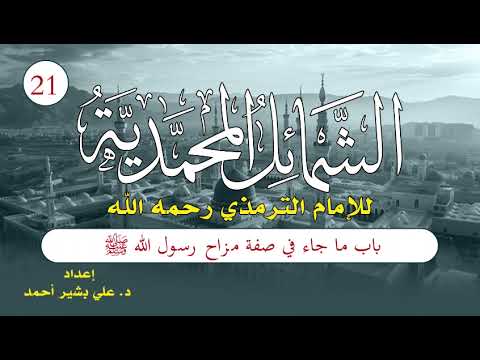
This lesson covers the chapter on the joking of the Messenger of Allah ﷺ from the book Ash-Shama'il Al-Muhammadiyya. Joking (al-muzah) means gentle companionship and playful engagement, aimed at bringing joy to hearts and increasing affection. The sheikh reviews several narrations in which the Prophet ﷺ joked with Anas ibn Malik رضي الله عنه, Abu Umair, Zahir and an elderly woman, explaining the benefits of each. He then sets out the principles of permissible joking: speaking only the truth, avoiding lies, harm and excess, citing al-Nawawi's distinction regarding forbidden joking.
Key takeaways
Permissible joking is gentle companionship and playful engagement intended to bring joy to hearts and strengthen affection.
The Prophet ﷺ joked with his companions in moderation and said only the truth, as when he called Anas رضي الله عنه "O you of the two ears."
His playful words to children, such as "O Abu Umair, what happened to the little bird?", show gentleness toward the young and care in bringing them joy.
A Muslim should not feel too proud to joke with his servant or those under him, since that goes against the Prophet's example and against humility.
Joking is a sunnah when it aims to win hearts toward good, is not vulgar, and takes into account the listener's temperament.
Allah judges by the inner heart and deeds rather than outward appearance, as the narration about Zahir رضي الله عنه illustrates.
Forbidden joking is excessive and habitual joking, which leads to much laughter, hardness of heart, loss of dignity, and must avoid lying and harming others.
Questions & answers
What is the ruling on joking in Islam?
The sheikh explains that permissible joking is a sunnah when it aims to win hearts toward good, is not vulgar, and involves no lies. The Prophet ﷺ joked with his companions in moderation and said only the truth.
What are the limits of forbidden joking?
Citing al-Nawawi, the sheikh explains that forbidden joking is excessive and habitual, leading to much laughter and hardness of heart, distracting from remembrance of Allah, causing harm, resentment and loss of dignity.
Did the Prophet ﷺ joke with children?
Yes. He said to Abu Umair, Anas's brother, "O Abu Umair, what happened to the little bird?" after the bird he played with had died and the boy grieved for it.
What should be avoided when joking?
One must avoid lying, mockery, insulting others and frightening a Muslim, since the Prophet ﷺ said: Woe to the one who speaks and lies to make people laugh.
Auto-generated from the lesson transcript; the lesson itself is the reference.
Transcript
Machine translation — may contain errors
0:00In the name of Allah, the Most Gracious, the Most Merciful.
0:07With pens of thorn,
0:09And ink of love,
0:11We inscribe lines more precious than gold,
0:15In describing the Master of all creation,
0:17Peace and blessings of Allah be upon him.
0:20The Prophetic characteristics (Shama'il).
0:30Chapter: What has been narrated regarding the humor of the Messenger of Allah, peace and blessings of Allah be upon him.
0:38Humor is gentleness, companionship, and playfulness.
0:43Its purpose is to bring joy to the soul,
0:46And to increase familiarity and affection,
0:49Along with other such noble meanings.
0:52This is why the Prophet, peace and blessings of Allah be upon him, would play with his Companions,
0:57And joke with them as much as was appropriate,
0:59Yet he would say nothing but the truth.
1:04On the authority of Anas ibn Malik, may Allah be pleased with him,
1:07That the Prophet, peace and blessings of Allah be upon him, said to him:
1:10"O you with the two ears."
1:12Abu Usama said,
1:14Who is one of the narrators,
1:16Meaning he was joking with him.
1:19In this hadith,
1:21The Prophet, peace and blessings of Allah be upon him,
1:23Joked with Anas ibn Malik, may Allah be pleased with him,
1:26And said to him, "O you with the two ears."
1:29This is a joke that contains no falsehood,
1:32For every human being has two ears,
1:35So he was truthful in his description of him.
1:38It is also not impossible that there is in this phrase
1:42A type of praise and commendation for Anas, may Allah be pleased with him,
1:46In the sense that he has two ears,
1:48With which he hears and obeys,
1:50And understands what is said to him.
1:52Furthermore, Anas, may Allah be pleased with him,
1:56Was the servant of the Messenger of Allah, peace and blessings of Allah be upon him,
1:59And that did not prevent the Prophet, peace and blessings of Allah be upon him,
2:03From joking with him.
2:05Whereas some people are too proud to joke with their servant or driver,
2:10Viewing it as something that diminishes their status and rank.
2:14This is contrary to the guidance of the Prophet, peace and blessings of Allah be upon him,
2:18And contrary to the humility that a Muslim ought to possess.
2:24On the authority of Anas ibn Malik, may Allah be pleased with him, who said:
2:29The Messenger of Allah, peace and blessings of Allah be upon him,
2:33Would mingle with us,
2:35To the point that he would say to a small brother of mine,
2:38"O Abu 'Umayr,
2:40What has the nughayr (small bird) done?"
2:42Abu 'Isa said,
2:44And the fiqh of this hadith is,
2:46That the Prophet, peace and blessings of Allah be upon him, would joke,
2:50And it contains the fact that he was a young boy,
2:53So he said to him, "O Abu 'Umayr."
2:56It also indicates that there is no harm in giving a child a bird to play with.
3:01The Prophet, peace and blessings of Allah be upon him, only said to him,
3:05"O Abu 'Umayr,
3:07What has the nughayr done?"
3:09Because he had a nughayr that he played with,
3:12And it died,
3:13So the boy grieved over it.
3:15The Prophet, peace and blessings of Allah be upon him, joked with him, saying,
3:19"O Abu 'Umayr,
3:21What has the nughayr done?"
3:25In this hadith,
3:27Anas ibn Malik, may Allah be pleased with him, informs us
3:30That the Prophet, peace and blessings of Allah be upon him, would mingle with them.
3:34Among the meanings of mingling
3:36Is joking,
3:38Meaning that the Prophet, peace and blessings of Allah be upon him, would joke with them,
3:43To the extent that he said to the young brother of Anas,
3:47"O Abu 'Umayr,
3:49What has the nughayr done?"
3:51Abu 'Umayr was the maternal brother of Anas,
3:54And he had a small bird he played with,
3:57Called a nughayr,
3:59Which is a bird resembling a sparrow,
4:01With a red beak.
4:03Abu 'Umayr's bird died,
4:05And he grieved over it,
4:07So the Prophet, peace and blessings of Allah be upon him, wanted to comfort him and remove his grief,
4:13And said to him, by way of joking,
4:16"O Abu 'Umayr,
4:18What has the nughayr done?"
4:20As a complete benefit,
4:22The maternal brother of Anas, whom the Prophet, peace and blessings of Allah be upon him, addressed with the kunya Abu 'Umayr,
4:28Was named Hafs.
4:30He died during the lifetime of the Prophet, peace and blessings of Allah be upon him,
4:34And he is the one mentioned in the famous story of Abu Talha,
4:38Which is in the two Sahih collections,
4:40In which a son of Abu Talha fell ill,
4:44And died while Abu Talha was away.
4:47When his wife saw that he had died,
4:50She prepared something and placed him to the side of the house.
4:54When Abu Talha arrived,
4:57He asked, "How is the boy?"
4:59She replied, "His soul has become calm,
5:02And I hope he is at rest."
5:05Abu Talha thought she was being truthful,
5:08So he spent the night.
5:10When he woke up, he performed ghusl,
5:13And when he wanted to leave,
5:15She informed him that he had died.
5:18He prayed with the Prophet, peace and blessings of Allah be upon him,
5:21Then he informed the Prophet, peace and blessings of Allah be upon him,
5:24Of what had happened between them.
5:26The Messenger of Allah, peace and blessings of Allah be upon him, said,
5:30"May Allah bless you both in your night."
5:34A man from the Ansar said,
5:37"I saw that they had nine children,
5:39All of whom had memorized the Qur'an."
5:42Al-Hafiz, may Allah have mercy on him, said:
5:45His statement, "A son of Abu Talha fell ill,"
5:48The son mentioned is Abu 'Umayr,
5:51Whom the Prophet, peace and blessings of Allah be upon him, used to joke with,
5:55And say to him, "O Abu 'Umayr,
5:58What has the nughayr done?"
6:00The hadith establishes the permissibility of giving a kunya to a young child,
6:03And it is not considered a lie.
6:06It also establishes the permissibility of playing with a bird,
6:08Provided there is no harm or cruelty to it.
6:12It also demonstrates the humility of the Prophet, peace and blessings of Allah be upon him,
6:16The perfection of his character,
6:18His gentleness toward the young,
6:20His comforting of them,
6:22And his bringing of joy to their hearts.
6:25On the authority of Abu Hurayra, may Allah be pleased with him, who said:
6:30They said, "O Messenger of Allah, you joke with us."
6:35He replied, "Yes, but I say nothing but the truth."
6:40In this hadith,
6:44The Companions, may Allah be pleased with them, said,
6:47"O Messenger of Allah, you joke with us,"
6:50Meaning, you play with us.
6:52The reason for this surprise and questioning
6:55Was either because they deemed it unlikely for him, peace and blessings of Allah be upon him, to joke,
7:00Due to his exalted status and great rank,
7:03So it was as if they were asking about the wisdom behind it.
7:06Or perhaps their question about this joking was,
7:10Is it one of his exclusive characteristics, such that they should not imitate it?
7:14So he clarified to them that it was not one of his exclusive characteristics,
7:17And that its permissibility is conditional upon speaking the truth.
7:21His statement, "I say nothing but the truth,"
7:25Means justice and honesty.
7:27The hadith establishes the permissibility of humor and playfulness,
7:31Indeed, it may even be a Sunnah if the intention is to soften hearts and achieve good,
7:36And it does not involve indecency.
7:38It was said to Ibn 'Uyayna,
7:40"Is joking a defect?"
7:42He replied, "Rather, it is a Sunnah for one who knows how to do it well."
7:46On the authority of Anas ibn Malik, may Allah be pleased with him,
7:50That a man asked the Messenger of Allah, peace and blessings of Allah be upon him, for a mount,
7:55So he said, "I will carry you on the offspring of a she-camel."
8:00The man said, "O Messenger of Allah, what would I do with the offspring of a she-camel?"
8:05He, peace and blessings of Allah be upon him, replied,
8:08"And do camels give birth to anything but she-camels?"
8:11In this hadith,
8:15A man asked the Messenger of Allah, peace and blessings of Allah be upon him, for a mount,
8:19Meaning he asked him to provide him with a beast,
8:23That is, to give him a beast to ride.
8:26The Prophet, peace and blessings of Allah be upon him, said to him,
8:30"I will carry you on the offspring of a she-camel."
8:33He said that to him by way of joking.
8:36The man understood that the Prophet, peace and blessings of Allah be upon him,
8:40Was going to give him a small camel calf,
8:43Not suitable for riding.
8:46So he said, "What would I do with the offspring of a she-camel?"
8:49Meaning, how could I possibly ride it?
8:52He, peace and blessings of Allah be upon him, replied,
8:55"And do camels give birth to anything but she-camels?"
8:58For the term "offspring of a she-camel" applies to both the young and the old.
9:02The Prophet, peace and blessings of Allah be upon him, intended
9:05To give him a camel that was suitable for riding,
9:09But he joked with him before that.
9:12This was a gentle joke.
9:15In the hadith, in addition to his joking,
9:18Peace and blessings of Allah be upon him,
9:21There is an indication of his guidance, and the guidance of others,
9:24That whoever hears a statement
9:27Should reflect upon it and not rush to reject it
9:30Before understanding what is intended by it.
9:35On the authority of Anas ibn Malik, may Allah be pleased with him,
9:39There was a man named Zahir,
9:41And he used to bring gifts to the Prophet, peace and blessings of Allah be upon him,
9:44From the desert.
9:53The Prophet, peace and blessings of Allah be upon him, would say,
9:56"Zahir is our desert-dweller,
9:59And we are his city-dwellers."
10:02He, peace and blessings of Allah be upon him, loved him.
10:05One day, the Prophet, peace and blessings of Allah be upon him, came to him while he was selling his goods, and embraced him from behind while he could not see him, so he said, "Who is this? Let me go!" Then he turned around and recognized the Prophet, peace and blessings of Allah be upon him.
10:24He then began to press his back against the chest of the Prophet, peace and blessings of Allah be upon him, once he recognized him.
10:31The Prophet, peace and blessings of Allah be upon him, began saying, "Who will buy this slave?" He replied, "O Messenger of Allah, by Allah, you will find me unsellable!"
10:44The Prophet, peace and blessings of Allah be upon him, said, "But in the sight of Allah, you are not unsellable," or he said, "You are precious in the sight of Allah."
10:55In this hadith, a man from the desert named Zahir used to come to Medina,
11:04And he would present the Prophet, peace and blessings of Allah be upon him, with gifts of things found among the desert people, such as dried yogurt, ghee, and the like.
11:15The Prophet, peace and blessings of Allah be upon him, would prepare to reward him with a better gift when he intended to return to the desert.
11:25He, peace and blessings of Allah be upon him, would say, "Zahir is our desert-dweller, and we are his city-dwellers," for the one in the desert needs what is in the city,
11:37And the one in the city needs what is in the desert, so each completes the other through what Allah, Glory be to Him, has facilitated for them.
11:47His statement, "He, peace and blessings of Allah be upon him, loved him," and he was a plain-looking man, meaning unattractive in appearance, but beautiful in character.
11:58It contains a reminder that the standard is the beauty of the inner self; thus, it came in the authentic hadith, "Allah does not look at your appearances or your wealth,
12:09But He looks at your hearts and your deeds." The Prophet, peace and blessings of Allah be upon him, came to him one day while he was selling his goods,
12:19He embraced him from behind while he could not see him—meaning he approached from his rear, placed his hands under his armpits, drew him into his embrace, and pressed him to his chest.
12:31He could not see who was embracing him and did not know who it was, so he said, "Let go of me! Leave me be!"
12:41He turned around and recognized the Prophet, peace and blessings of Allah be upon him, and was filled with immense joy, and he began to—meaning he did not refrain from—pressing his back against the chest of the Prophet, peace be upon him.
12:56Seeking blessing and closeness to him, so the Prophet, peace be upon him, began to say, "Who will buy this slave?" This was part of the Prophet's, peace be upon him, joking.
13:10In which he would say nothing but the truth, as he referred to him as a "slave" because all people are slaves to Allah the Almighty.
13:20Zahir said, "O Messenger of Allah, then by Allah you will find me unsellable," meaning of little value, "no one would want me due to my homeliness and unattractive appearance."
13:32The Prophet, peace be upon him, replied, "But in the sight of Allah, you are not unsellable," or "You are, in the sight of Allah, highly valuable because you are a believer with a pure heart."
13:45This hadith demonstrates the permissibility of joking with someone known to accept it, though it is not wisdom to joke and tease everyone.
13:55People’s temperaments differ and their characters vary; among them is the stern person who does not accept joking, and among them is the one who is moderate in this regard.
14:07And among them is the one who jokes excessively, so each requires a specific approach; the Prophet, peace be upon him, knew that Zahir loved humor and joking, so he would joke with him.
14:21On the authority of al-Hasan, may Allah be pleased with him, he said: An old woman came to the Prophet, peace be upon him, and said, "O Messenger of Allah, pray to Allah to admit me into Paradise."
14:34He said, "O mother of so-and-so, no old woman will enter Paradise." He said: She turned away crying, so he said, "Tell her that she will not enter it while she is an old woman."
14:49For Allah the Almighty says: ﴾Indeed, We have produced them in a [new] creation, and made them virgins, devoted [to their husbands] and of equal age.﴿
15:03In this hadith, an old woman—meaning an elderly, aged woman—came to the Prophet, peace be upon him, asking him to pray to Allah to admit her into Paradise.
15:19He, peace be upon him, informed her that no old woman enters Paradise, so she turned away crying—meaning she left while weeping—so he, peace be upon him, said, "Tell her she will not enter it while she is an old woman."
15:37Meaning she will not enter Paradise in the state of being an old woman, but rather she will enter it as a young woman; it has been narrated in the Musnad on the authority of Abu Hurayrah, may Allah be pleased with him, that the Prophet, peace be upon him, said:
15:52"The people of Paradise will enter Paradise hairless, beardless, with white skin, curly hair, and kohl-lined eyes, at the age of thirty-three."
16:04And his statement: ﴾Indeed, We have produced them in a [new] creation, and made them virgins, devoted [to their husbands] and of equal age.﴿
16:17Ibn Kathir said: Meaning We restored them in the new creation after they had been old, withered women, and they became virgins, devoted to their husbands.
16:27Meaning after having lost their virginity, they returned as virgins, devoted—meaning affectionate toward their husbands with sweetness, charm, and grace.
16:37"Devoted" (urub) is the plural of "arub," which is the beautiful woman who is affectionate toward her husband, and "of equal age" (atrab) means those who are all of one age, thirty-three years.
16:51This is the perfect age of youth, so their wives are affectionate, of equal age, harmonious, loving, pleased, and pleasing; they do not grieve, nor are they grieved.
17:03Rather, they are the joy of the souls, the delight of the eyes, and the radiance of the sight; the benefit of joking from the Sunnah of the Prophet, peace be upon him.
17:17It is a legitimate form of recreation and a pleasant kindness through which a group relaxes, allowing the spirit of love, intimacy, and affection to prevail among the Muslims.
17:29It removes repression and the feeling of boredom and weariness, but one must be cautious of excessive joking due to the harm that may result from it.
17:40And because excessive joking leads to excessive laughter, and the Prophet, peace be upon him, said:
17:47"Do not laugh excessively, for excessive laughter kills the heart."
17:53Therefore, joking should be like salt in food—neither too much nor too little, lest it spoil the food.
18:03Likewise, a person should be moderate in this; one should not engage in it entirely, nor should one avoid it entirely.
18:13One must avoid harming others or mocking them in one's joking.
18:18One should say nothing but the truth in one's joking and avoid lying.
18:24Because the Prophet, peace be upon him, said: "Woe to the one who speaks and lies to make the people laugh; woe to him, woe to him."
18:35One must also avoid frightening a Muslim, even in jest.
18:39The Prophet, peace be upon him, said: "It is not lawful for a Muslim to frighten another Muslim."
18:46And the Prophet, peace be upon him, said: "None of you should take the property of his brother, whether in earnest or in jest."
18:55Likewise, any joke that involves a violation of the Shari'ah or serves as a means to one.
19:02Or results in the harm of a Muslim through word, deed, or otherwise.
19:07All of that is forbidden joking.
19:10Al-Nawawi, may Allah have mercy on him, said:
19:13The scholars said that the forbidden joking is that which is excessive and persisted in.
19:20For it induces laughter and hardness of the heart.
19:24It distracts from the remembrance of Allah the Almighty and reflection upon the important matters of religion.
19:29And it often leads to causing harm.
19:33It breeds resentment and diminishes one's dignity and gravity.
19:38As for that which is free from these matters.
19:41It is the permissible kind that the Messenger of Allah, peace be upon him, used to engage in.
19:47The hadith has more to follow, if Allah wills, and Allah knows best.
19:54May the peace and blessings of Allah be upon our Prophet Muhammad.