budoorzahera launched in 2026 to carry the light of knowledge to every heart, in every language. Every lesson is available in the original audio with a full synced transcript, translated into fifteen other languages, with translated-audio listening available for a number of them.
You can copy any line of the transcript while listening, download the full text in multiple formats (TXT · SRT · VTT), or share a lesson with someone you care about in one tap. We ask God to make this work beneficial.
4192audio lessons
59complete series
16world languages
Error log
An automatic log of the most recent errors the app ran into on your device — copying and sending it to us helps a lot when troubleshooting a problem.
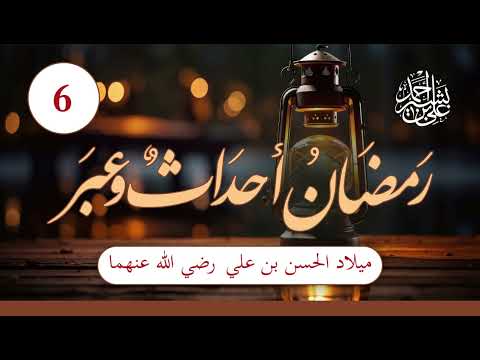
Ramadan events and lessons | Episode (6) | The birth of the grandson of the Messenger of God, Al-Hasan bin Ali bin Abi Talib, may God be pleased with them both
This lesson covers the birth of al-Hasan ibn Ali (may Allah be pleased with them both) in the middle of Ramadan in the third year after the Hijrah, and the celebration that accompanied it: the Prophet ﷺ called the adhan in his ear, performed the 'aqiqah for him, and ordered his head shaved with silver given in charity equal to the weight of his hair. The lesson then presents his character and the virtues recorded for him, including the Prophet's ﷺ saying: "Al-Hasan and al-Husayn are the masters of the youth of Paradise." It concludes with his role in reconciling the Muslims after he assumed the caliphate, and the lessons drawn from the Prophet's ﷺ love for his grandson and the Companions' honor of him.
Key takeaways
The Prophet ﷺ celebrated al-Hasan's birth by calling the adhan in his ear and performing the 'aqiqah for him.
The Prophet ﷺ ordered silver equal to the weight of the newborn's hair to be given in charity to the poor, reflecting mercy toward the needy.
The Prophet's ﷺ mercy toward al-Hasan and al-Husayn, lifting them from the pulpit when they stumbled during his sermon.
The Prophet's ﷺ description of them as "my two fragrant flowers of this world," as explained by the sheikh.
The Prophet's ﷺ saying: "Whoever loves them loves me, and whoever hates them hates me," showing that love for them is part of love for him.
The Prophet's ﷺ glad tidings that al-Hasan and al-Husayn are the masters of the youth of Paradise, and his prophecy that Allah would reconcile two groups of Muslims through al-Hasan.
Al-Hasan's renunciation of worldly rule to spare the blood of Muslims, preferring the Hereafter over the adornments of this world.
Questions & answers
When was al-Hasan ibn Ali born?
He was born in the middle of Ramadan in the third year after the Hijrah in Madinah, and he was the first child of Fatimah (may Allah be pleased with her).
What did the Prophet ﷺ do when al-Hasan was born?
He called the adhan in his ear, performed the 'aqiqah for him with a ram, and ordered Fatimah (may Allah be pleased with her) to shave his head and give silver equal to his hair's weight in charity to the poor.
What does the Prophet's ﷺ saying "they are my two fragrant flowers of this world" mean?
The sheikh explains that it means they are among the blessings Allah honored the Prophet ﷺ with, since children are smelled and kissed, so they are like fragrant flowers.
Why is al-Hasan remembered for reconciling the Muslims?
He assumed the caliphate for about six months after his father's martyrdom, worked to reconcile the Muslims and spare their blood, preferring the Hereafter over worldly rule, which fulfilled the Prophet's ﷺ glad tidings.
Auto-generated from the lesson transcript; the lesson itself is the reference.
Transcript
Machine translation — may contain errors
0:00In the name of Allah, the Most Gracious, the Most Merciful.
0:05A summary of the book:
0:07Ramadan: Events and Lessons.
0:11The birth of the grandson of the Messenger of Allah, peace be upon him.
0:19Al-Hasan ibn Ali ibn Abi Talib, may Allah be pleased with them both.
0:25The time:
0:27Mid-Ramadan,
0:29of the third year after the Hijrah.
0:32On a radiant, blessed day in the Prophetic city of Madinah,
0:41a noble soul graced the world.
0:44The Prophetic household rejoiced at his arrival,
0:47and was gladdened by his dawning with immense joy.
0:51Thus, happiness spread across hearts and faces alike.
0:56For in the middle of Ramadan,
0:58in the third year of the Hijrah,
1:00was born the Commander of the Faithful,
1:03Al-Hasan ibn Ali ibn Abi Talib, may Allah be pleased with them both.
1:09This noble newborn had a special significance,
1:13for he was the first child born to the apple of the Messenger of Allah’s eye,
1:17Fatimah, may Allah be pleased with her,
1:20and the first child from the Banu Hashim
1:23for his beloved, Ali, may Allah be pleased with him,
1:26the forerunner to Islam.
1:29He was the first grandson of the Messenger of Allah, peace be upon him,
1:33and his birth was marked by great celebration.
1:37Among the evidence for this:
1:41First, the Messenger of Allah, peace be upon him, reciting the adhan in his ear.
1:48It is narrated from Abu Rafi‘, may Allah be pleased with him,
1:51that the Prophet, peace be upon him,
1:54recited the adhan in the ear of Al-Hasan ibn Ali
1:57when Fatimah gave birth to him.
2:01Second, the Messenger of Allah, peace be upon him, performed the ‘aqiqah
2:06for Al-Hasan and Al-Husayn, may Allah be pleased with them both,
2:09by sacrificing two rams for each.
2:12Third, the Messenger of Allah, peace be upon him, commanded
2:17Fatimah, may Allah be pleased with her, to shave his head
2:21and to give the weight of his hair in silver as charity to the poor.
2:25It is narrated from Abu Rafi‘, may Allah be pleased with him, who said:
2:29The Prophet, peace be upon him, said to Fatimah when she gave birth to Al-Hasan:
2:34"Shave his head and give the weight of his hair in silver as charity to the poor."
2:41Al-Hasan ibn Ali, may Allah be pleased with them both, was a unique personality,
2:48who embodied a great many virtuous qualities.
2:52This is no surprise,
2:54for the source from which he shone was of brilliant light,
2:58and the garden in which he grew and flourished
3:02was a garden of absolute purity.
3:05The hands that nurtured him
3:07are the standard of purity and righteousness.
3:11The environment that encompassed his years
3:14is the most righteous environment history has ever known.
3:18In the house of Prophethood,
3:20he began his early years with his grandfather, the Prophet,
3:23his pious father,
3:25and his righteous mother, Al-Zahra’.
3:28After the death of the Messenger of Allah, peace be upon him,
3:32and his noble mother, may Allah be pleased with her,
3:35his father took sole charge of his upbringing and guidance.
3:39Thus, he grew up to be one of the great figures of his time,
3:43one of those for whom history preserved models of generosity, forbearance, and piety.
3:50He spent his life, which exceeded four decades,
3:53between deeds of praise and words of wisdom,
3:56leaving behind for those who followed a volume of guidance and emulation.
4:11Whoever examines the hadith of the Messenger of Allah, peace be upon him,
4:16and his fragrant Seerah,
4:18will find that Al-Hasan and his brother Al-Husayn, may Allah be pleased with them both, hold a lofty status
4:24and possess many virtues,
4:26as attested to by the words of the Messenger of Allah, peace be upon him,
4:31and his treatment of them.
4:33The leading scholars of hadith have dedicated chapters to them in their books,
4:38under the sections of merits and virtues,
4:41such as the two Imams, Al-Bukhari and Muslim, may the mercy of Allah be upon them.
4:46Among these are:
4:48First:
4:49The care of the Messenger of Allah, peace be upon him,
4:53his mercy toward them, and his inability to be patient without them.
4:57It is narrated from Abu Buraydah, may Allah be pleased with him, who said:
5:01The Messenger of Allah, peace be upon him, was delivering a sermon to us
5:05when Al-Hasan and Al-Husayn arrived,
5:08wearing two red shirts,
5:11walking and stumbling.
5:13The Messenger of Allah, peace be upon him, descended from the pulpit,
5:17picked them up,
5:19and placed them before him.
5:21Then he said:
5:23"Allah has spoken the truth:
5:25'Your wealth and your children are but a trial.'"
5:29"I looked at these two boys walking and stumbling,
5:34and I could not restrain myself until I interrupted my sermon and picked them up."
5:39Second:
5:42The Messenger of Allah, peace be upon him, designated them
5:45as his two sweet-smelling flowers of this world.
5:48It is narrated from Ibn Abi Nu‘m who said:
5:51I was a witness for Ibn ‘Umar
5:53when a man asked him about the blood of a mosquito.
5:56He said:
5:58"Where are you from?"
6:00He replied:
6:01"From the people of Iraq."
6:03He said:
6:04"Look at this man;
6:06he asks me about the blood of a mosquito,
6:09yet they killed the grandson of the Prophet, peace be upon him!
6:13I heard the Prophet, peace be upon him, say:
6:18'They are my two sweet-smelling flowers of this world.'"
6:21The meaning is
6:23that they are among the blessings Allah has honored and gifted me with,
6:27because children are smelled and kissed,
6:31so they are like flowers.
6:35Third:
6:37The great love of the Messenger of Allah, peace be upon him, for Al-Hasan,
6:42and his supplication for him and for those who love him.
6:45It is narrated from Al-Bara’, may Allah be pleased with him, who said:
6:49I saw the Prophet, peace be upon him,
6:52with Al-Hasan ibn Ali on his shoulder,
6:55saying:
6:57"O Allah, I love him, so love him."
7:02Fourth:
7:04The Messenger of Allah, peace be upon him, made
7:07loving them a sign of true love for him,
7:10and hating them a sign of hating him.
7:13It is narrated from Abu Hurayrah, may Allah be pleased with him, who said:
7:16The Messenger of Allah, peace be upon him, came out to us,
7:21and with him were Al-Hasan and Al-Husayn,
7:24one on his shoulder,
7:26and the other on his shoulder,
7:28and he was kissing this one at one moment,
7:31meaning he was kissing him,
7:33and that one at another.
7:36A man said to him:
7:38"O Messenger of Allah,
7:40you love them?"
7:42He replied:
7:44"Whoever loves them has loved me,
7:47and whoever hates them has hated me."
7:51Fifth:
7:53The glad tidings of the Messenger of Allah, peace be upon him,
7:56that Al-Hasan and Al-Husayn
7:59are the leaders of the youth of Paradise.
8:03It is narrated from Abu Sa‘id Al-Khudri, may Allah be pleased with him, who said:
8:07The Messenger of Allah, peace be upon him, said:
8:11"Al-Hasan and Al-Husayn
8:13are the leaders of the youth of Paradise."
8:16A fragrant Seerah and a radiant life.
8:20Abu Muhammad,
8:23Al-Hasan ibn Ali ibn Abi Talib, may Allah be pleased with them both,
8:28the grandson of the Messenger of Allah, peace be upon him, and his sweet-smelling flower.
8:33He was a beacon of intelligence and virtue,
8:37a bright full moon in the sky of forbearance and nobility,
8:42and a towering figure in the horizons of righteousness and justice.
8:47Allah bestowed upon him the honor of lineage,
8:50the beauty of character and appearance,
8:52and the favor of acceptance among the people.
8:55Allah granted him many of the blessings and bounties of this world.
9:01Al-Hasan, may Allah be pleased with him, was honored
9:04by the Messenger of Allah, peace be upon him, naming him,
9:08as some scholars have mentioned.
9:11Abu Ahmad Al-‘Askari said:
9:14The Prophet, peace be upon him, named him Al-Hasan,
9:18and gave him the kunya Abu Muhammad,
9:21and this name was not known in the pre-Islamic era.
9:25He, may Allah be pleased with him, was
9:27the person most resembling the Messenger of Allah, peace be upon him.
9:31Whoever saw the Messenger of Allah,
9:35remembered the Messenger of Allah,
9:37and whoever had not seen the Prophet of Allah but saw Al-Hasan,
9:41recognized his likeness in him.
9:44It is narrated from Anas ibn Malik, may Allah be pleased with him, who said:
9:49"No one was more like the Messenger of Allah than Al-Hasan ibn Ali."
9:55Due to his closeness to the Messenger of Allah, peace be upon him,
9:59and his sweet qualities and noble characteristics,
10:03he attained the love of the Companions, may Allah be pleased with them,
10:06and their honor and reverence.
10:09It is narrated from ‘Uqbah ibn Al-Harith, may Allah be pleased with him, who said:
10:13Abu Bakr, may Allah be pleased with him, prayed ‘Asr,
10:17then went out walking,
10:19and saw Al-Hasan playing with the children.
10:23He carried him on his shoulder and said:
10:26"May my father be sacrificed for him; he resembles the Prophet,
10:29he does not resemble ‘Ali."
10:32And ‘Ali, may Allah be pleased with him, was laughing.
10:35Even if the virtues of Abu Muhammad, may Allah be pleased with him, are numerous,
10:39we must not forget the virtue foretold by the Messenger of Allah, peace be upon him,
10:46which came to pass just as he had predicted:
10:48his leadership, through which Allah brought reconciliation between two great factions of the Muslims.
10:55It is narrated from Abu Bakrah, may Allah be pleased with him, who said:
10:59I heard the Prophet, peace be upon him, on the pulpit,
11:03with Al-Hasan at his side,
11:06looking at the people one moment and at him the next,
11:10and saying:
11:11"This son of mine is a leader,
11:14and perhaps Allah will use him to reconcile two factions of the Muslims."
11:19Al-Hasan, may Allah be pleased with him, assumed the leadership of the believers
11:25after the martyrdom of his father, may Allah be pleased with them both.
11:29His caliphate, which lasted six months and some days, completed
11:34the thirty years of the Prophetic caliphate.
11:37Those months were the first time of uniting the word and sparing the blood of the Muslims,
11:44for he strove for reconciliation between the Muslims,
11:47and preferred the Hereafter over the kingdom of this world and its adornments.
11:52And he uttered his famous statement
11:55when he saw the two massive armies clad in iron like mountains:
12:00"Should I pit these people against one another for the sake of a worldly kingdom?
12:06I have no need for it."
12:09Ibn Kathir said:
12:11"Al-Hasan passed away at the age of forty-seven."
12:15Multiple scholars stated this as well, and it is the most authentic view.
12:19The most widely known opinion is that he died in the year 49 AH, as we have mentioned.
12:25Others said he died in the year 50 AH,
12:29while it was also said in the year 51 or 58 AH.
12:35In this event, there are profound lessons:
12:39First, it demonstrates the immense love of the Messenger of Allah, peace and blessings of Allah be upon him, for al-Hasan, may Allah be pleased with him.
12:48Second, out of a father's love for his daughter, he naturally loves her children.
12:54Third, it shows the great honor the Companions, may Allah be pleased with them, accorded to the Prophet's grandson, Abu Muhammad.