budoorzahera launched in 2026 to carry the light of knowledge to every heart, in every language. Every lesson is available in the original audio with a full synced transcript, translated into fifteen other languages, with translated-audio listening available for a number of them.
You can copy any line of the transcript while listening, download the full text in multiple formats (TXT · SRT · VTT), or share a lesson with someone you care about in one tap. We ask God to make this work beneficial.
4192audio lessons
59complete series
16world languages
Error log
An automatic log of the most recent errors the app ran into on your device — copying and sending it to us helps a lot when troubleshooting a problem.
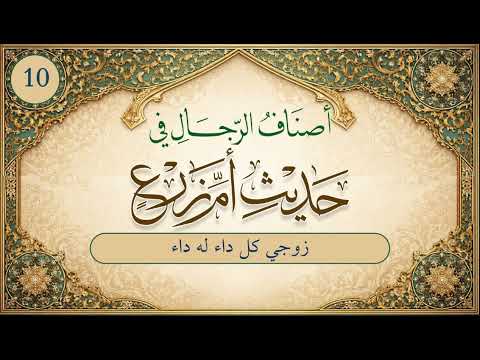
This episode examines the seventh woman's description of her husband in the story of Umm Zar‘, "every ailment he has an ailment," and the sheikh explains that such a man cannot be lived with peacefully because of his bad character and cruelty. The sheikh outlines two reasons such marriages recur: guardians abandoning their responsibility to marry off their daughters, and the loss of religion and character as the criterion for choosing a husband. He cites the hadiths on the requirement of a guardian and the Prophet's ﷺ instruction to marry those whose religion and character you are pleased with, and concludes that the best of people are those whose good is hoped for and whose evil is safe from.
Key takeaways
Her words "every ailment he has an ailment" indicate that he combined every fault of blame: foolishness, bad companionship, incapacity, and beating.
The requirement of a guardian in marriage, because men are better able to know a suitor's qualities and inquire about him among themselves.
Caution against early relationships between young men and women before the contract, since a girl's attachment to a man blinds her to his faults.
Religion and character must be considered in choosing a husband; choosing by wealth and status alone can lead to trial and widespread corruption.
Religion and character cannot be separated in dealing with people, as in the hadith of the woman who prays and fasts but harms her neighbors with her tongue.
Whoever has every fault of people is among the worst of people, since his good is not hoped for and his evil is not safe from, as in the Prophet's ﷺ saying.
Women too should seek religion and character and ask their guardians to verify them; had they done so, such cases would not be so common.
Questions & answers
What does Umm Zar‘'s saying "every ailment he has an ailment" mean about her husband?
The sheikh explains it means he combined every fault of people, as Abu ‘Ubayd al-Harawi stated, and al-Khalil al-Farahidi interpreted it as every flaw found among men being in him.
Why did Islam require a guardian in marriage?
Because men are better able to know a suitor's qualities and character and to inquire about him among themselves, and they judge by reason, whereas a woman may be swayed by emotion and overlook faults.
What criterion did the Prophet ﷺ recommend for choosing a husband?
He ﷺ advised marrying the one whose religion and character you are pleased with, warning that otherwise there would be trial on earth and widespread corruption, as the sheikh cited from Ibn Majah and al-Mazhari.
Who are the worst of people according to the hadith the sheikh cited?
They are those whose good is not hoped for and whose evil is not safe from, while the best are those whose good is hoped for and whose evil is safe from, as in Tirmidhi's narration from Abu Hurayrah.
Auto-generated from the lesson transcript; the lesson itself is the reference.
Transcript
Machine translation — may contain errors
0:00In the name of Allah, the Most Gracious, the Most Merciful.
0:03Categories of Men
0:08in the Hadith of Umm Zar'
0:13"My husband: every malady is found in him."
0:23The seventh woman who spoke in that gathering of women
0:28described her husband by saying:
0:30"My husband is hopelessly incompetent or dim-witted (ghayaya or 'ayaya),
0:34completely overwhelmed (tabaqa);
0:36every malady is found in him;
0:38he has fractured your skull, or broken your limb, or inflicted all of that upon you."
0:43It could be said of her
0:45that she is truly wretched,
0:47for she combined every blameworthy trait in describing her husband.
0:50There remained in him no good whatsoever that a woman might benefit from:
0:56he is foolish and ignorant,
0:58abusive in companionship,
0:59impotent in marital relations,
1:02and beats his wife severely and violently;
1:05indeed, he has gathered every human flaw within himself.
1:09Al-Qadi 'Iyad (may Allah have mercy on him) said:
1:12"She described him as foolish,
1:13reaching the utmost extreme in all defects and shortcomings,
1:17treating his family abominably,
1:19incapable of fulfilling her needs,
1:22while beating her and causing her harm.
1:25If she speaks to him, he insults her;
1:28if she jokes with him, he fractures her skull;
1:31and whenever he gets angry,
1:32he either fractures her skull,
1:34breaks one of her limbs—
1:37which is the meaning of 'broke your limb' (fallak),
1:40and from this root the defeated are termed
1:42'fall'—
1:43or cuts her skin or pierces her,
1:46which is the meaning of 'fractured your skull' (shajjak),
1:48or inflicts all of that upon her,
1:51combining beating, wounding, and breaking bones,
1:54or crushing her through hostility and hurtful words,
1:58as well as seizing her wealth."
2:02This type of man
2:04is impossible to live with in peace,
2:07and it is inconceivable that these vile manners
2:10in such a type of person
2:12emerged suddenly after marriage;
2:15rather, it is expected that they existed in him prior to marriage.
2:19The question that presents itself is:
2:22Why did this woman accept him?
2:25And upon whom does the blame fall for marrying her off to him?
2:29Firstly,
2:30this incident occurred during the Pre-Islamic Era (Jahiliyyah),
2:34but unfortunately, it recurs even in Islam.
2:38So where did the mistake stem from?
2:40Secondly,
2:42when looking at the teachings of Islam
2:44and its sublime manners,
2:46we find that it established a precise system
2:48to prevent such a scenario
2:50from occurring in reality.
2:52Why, then, does it keep recurring?
2:55What appears to me
2:57is that the recurrence of such a situation in reality
3:01stems from two matters
3:03that fall under a single heading:
3:05the lack of adherence to the teachings of Islam
3:08and its etiquettes regarding the marriage of young women.
3:12The first matter
3:13is that guardians have abdicated their responsibility in the marriage of the young woman.
3:18For the Prophet (peace and blessings of Allah be upon him)
3:20forbade a woman from marrying herself off,
3:23and commanded her guardians to marry her off,
3:26so that men bear the responsibility of arranging her marriage
3:30to someone who is suitable for her.
3:33Many hadiths have been narrated regarding this,
3:36among which is the hadith
3:38on the authority of Abu Musa (may Allah be pleased with him),
3:40that the Prophet (peace and blessings of Allah be upon him) said:
3:44"There is no marriage without a guardian."
3:47Narrated by Abu Dawud.
3:49And on the authority of 'A'ishah (may Allah be pleased with her), who said:
3:52The Messenger of Allah (peace and blessings of Allah be upon him) said:
3:56"Any woman who marries without the permission of her guardians,
4:00her marriage is invalid,"
4:02repeating it three times;
4:04"and if he has consummated the marriage with her,
4:05she is entitled to the bridal due (mahr) in return for what he enjoyed of her.
4:09If they dispute,
4:10then the ruler is the guardian of whoever has no guardian."
4:14Narrated by Abu Dawud.
4:16And on the authority of Abu Hurayrah (may Allah be pleased with him), who said:
4:20The Messenger of Allah (peace be upon him) said:
4:23"A woman does not give a woman in marriage,
4:26nor does a woman give herself in marriage;
4:29for indeed, it is the fornicatress who gives herself in marriage."
4:33Narrated by Ibn Majah.
4:36These hadiths
4:37place the responsibility of marriage upon the guardians
4:41and forbid a woman from marrying herself off,
4:44and that is for many wise reasons.
4:47Among them:
4:48men are more capable of discerning the suitor's traits and character
4:53and inquiring about him among other men,
4:55unlike the woman,
4:57who is unable to do so.
5:00And among them:
5:01men let reason govern their affairs,
5:05unlike the woman,
5:06who lets emotion govern hers;
5:09thus, if her heart becomes attached to a man,
5:11she turns a blind eye to all of his bad qualities.
5:16This highlights the danger of relationships between young men and women before the marriage contract:
5:22the girl becomes emotionally attached to him,
5:24and it becomes difficult for her to step away,
5:27especially since young men, in their relationships with girls,
5:30display their finest traits to win them over.
5:35Thus, when the girl becomes attached,
5:36she is blinded to the true reality.
5:40For this reason, Islam forbade women
5:42from free mixing with non-mahram men,
5:44so that such relationships do not develop
5:47between young men and women,
5:49which would subsequently ruin their lives.
5:52The second matter
5:54is the loss of proper criteria in selecting men.
5:57The way people view the selection of a spouse today
6:00has changed due to their distance
6:02from adhering to the commands of the Sharia.
6:05Thus, the criteria for choosing men has become
6:07a materialistic standard,
6:09tied solely to worldly considerations.
6:12This is entirely contrary
6:14to the counsel of the Prophet (peace be upon him),
6:18where he said:
6:19"If there comes to you one with whose
6:21character and religious commitment you are pleased, marry [your daughter] to him;
6:24for if you do not do so,
6:26there will be tribulation on earth and widespread corruption."
6:30Narrated by Ibn Majah.
6:32Al-Mazhari (may Allah have mercy on him) said:
6:35"Meaning: if someone asks you
6:37to give a woman among your daughters in marriage,
6:40or your female relatives,
6:41then look:
6:43if he is a righteous Muslim
6:45of good character,
6:46then marry her to him.
6:47For if you do not marry
6:49the women among your relatives
6:51to anyone except someone well-known, possessing wealth and status,
6:55and other such worldly attributes favored by
6:58worldly people,
7:00most of your women will remain unmarried,
7:03and most men will remain unmarried.
7:07At that point, men will incline toward women,
7:10and women will incline toward men,
7:12fornication will become rampant,
7:14and shame will fall upon the guardians
7:16due to fornication being attributed to their women.
7:19Protective jealousy may boil within them toward their female relatives
7:22because of hearing accusations of fornication against them,
7:25leading them to kill the women,
7:27and to kill those who targeted them with immoral acts.
7:30All of this represents widespread corruption
7:33and great tribulation."
7:37However,
7:38why would a woman stay with such a foolish man,
7:41and when did she discover these traits?
7:44There is blame upon the woman as well,
7:47just as we placed blame upon the guardians,
7:50regarding her criteria for accepting the man
7:52who proposed to her.
7:55Whatever that criteria may have been,
7:57it certainly was not religious commitment and good character.
8:01For had her criteria been religious commitment and good character,
8:04we would not find such cases
8:07in our societies;
8:09because this foolish category of men
8:12inevitably manifests his foolishness
8:14with those he lives with.
8:16Had the woman inquired about his religious commitment and character,
8:19and asked her guardians to verify
8:22that he possessed both,
8:24she would have discovered his true nature.
8:26If the Prophet (peace be upon him)
8:29censured a woman who stands in night prayer
8:32yet possesses bad character toward her neighbors,
8:36then how about someone whose character is like this toward the people of his household?
8:40On the authority of Abu Hurayrah (may Allah be pleased with him), who said:
8:44A man said:
8:45"O Messenger of Allah,
8:47so-and-so
8:48is mentioned for her abundant prayer, fasting, and charity,
8:53except that she harms her neighbors with her tongue."
8:57He said:
8:58"She is in the Hellfire."
9:00The man said:
9:01"O Messenger of Allah,
9:02so-and-so
9:04is mentioned for her modest amount of fasting, charity, and prayer,
9:09and she gives only small pieces of dried curd in charity,
9:12yet she does not harm her neighbors with her tongue."
9:16He said:
9:17"She is in Paradise."
9:18Narrated by Ahmad.
9:21This hadith
9:22is entirely explicit in showing that religion and moral conduct in dealing with people cannot be separated.
9:30How, then, can a woman accept marrying a man devoid of good character?
9:35Furthermore, let us reflect on her statement:
9:38"Every defect is found in him."
9:41Abu 'Ubayd al-Harawi, may Allah have mercy on him, said:
9:44"Meaning, every illness found among people
9:47is present in him and is part of his afflictions."
9:50And al-Khalil al-Farahidi, may Allah have mercy on him, said:
9:53"She meant that every single flaw that can be found in men exists in him."
9:59This expression encompasses every form of evil in this type of man;
10:04he is indeed among the worst of people.
10:07For on the authority of Abu Hurayrah, may Allah be pleased with him,
10:10the Messenger of Allah, peace and blessings of Allah be upon him, stood before a group of seated people
10:15and asked:
10:17"Shall I not inform you of the best among you from the worst among you?"
10:20He said:
10:21They remained silent.
10:23He repeated it three times,
10:26so a man said:
10:27"Yes, O Messenger of Allah!
10:29Inform us of the best among us from the worst among us."
10:32He said:
10:34"The best of you is the one from whom good is expected and from whose harm people are safe,
10:38and the worst of you is the one from whom no good is expected and from whose harm people are not safe."
10:43Narrated by al-Tirmidhi.
10:45If all the flaws of humanity are combined in this husband,
10:49then she can never hope for any good from him,
10:51nor can she feel safe from his harm.
10:55We shall continue in a future gathering, if Allah wills.
10:58And all praise is due to Allah, the Lord of all the worlds.