budoorzahera launched in 2026 to carry the light of knowledge to every heart, in every language. Every lesson is available in the original audio with a full synced transcript, translated into fifteen other languages, with translated-audio listening available for a number of them.
You can copy any line of the transcript while listening, download the full text in multiple formats (TXT · SRT · VTT), or share a lesson with someone you care about in one tap. We ask God to make this work beneficial.
4192audio lessons
59complete series
16world languages
Error log
An automatic log of the most recent errors the app ran into on your device — copying and sending it to us helps a lot when troubleshooting a problem.
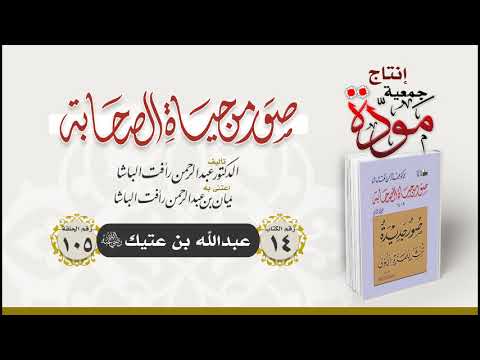
The lesson recounts the story of Abdullah ibn Atik رضي الله عنه and the killing of Salam ibn Abi al-Huqayq, one of the Jewish leaders who plotted against Islam and harmed the Prophet ﷺ. The Khazraj asked the Prophet ﷺ for permission to send a group to kill him, and he permitted them, instructing them not to kill a woman, a child, or to harm them. Abdullah entered the fortress in disguise, locked the gates behind him, and struck Salam with his sword until he died, refraining from harming his wife in keeping with the Prophet's ﷺ instruction. The companions returned after hearing the man's wife confirm his death, and the Prophet ﷺ gave them the glad tidings of success.
Key takeaways
The companions' commitment to the Prophet's ﷺ instruction not to kill women and children, even in the most intense situations.
The healthy rivalry between the Aws and Khazraj tribes in supporting Islam and obeying Allah and His Messenger ﷺ.
Careful planning, patience, and caution in carrying out the mission, such as locking the doors behind him and hiding the lamp.
Courage and steadfastness, as Abdullah continued on despite his broken leg.
The importance of verification: he confirmed the man's location before striking, fearing he might hit someone else.
The Prophet's ﷺ glad tidings of success to his companions, and his prayer for Abdullah's well-being and the healing of his leg.
Abdullah ibn Atik's perseverance in jihad until he was martyred at the Battle of Yamama.
Questions & answers
Who was Abdullah ibn Atik رضي الله عنه?
He was a companion from the Khazraj tribe who led the group the Prophet ﷺ sent to kill Salam ibn Abi al-Huqayq. He narrated the story himself and remained a fighter in the cause of Allah until he was martyred at the Battle of Yamama.
Why did the Prophet ﷺ send someone to kill Salam ibn Abi al-Huqayq?
The lesson explains that Salam ibn Abi al-Huqayq was among the greatest enemies of the Prophet ﷺ and the Muslims, inciting the breaking of covenants and rallying enemies, and the Prophet ﷺ was certain that the evil could only end by eliminating him.
What instruction did the Prophet ﷺ give the group?
He instructed them not to kill a woman or a child, and not to harm them. Abdullah kept to this instruction and did not kill Salam's wife.
How did the companions escape from the fortress after Salam was killed?
After the people of the fortress thought the raiders were outside, the companions hid in a water channel beneath the fortress. When the people gave up finding them, they returned to their leader, and the companions left once they were certain he had died.
Auto-generated from the lesson transcript; the lesson itself is the reference.
Qur’an verses cited in this lesson
Al-Baqarah 2:214 — Or think ye that ye will enter paradise while yet there hath not come unto you the like of (that which came to) those who passed away before you? Affliction and adversity befell them, they were shaken as with earthquake, till the messenger (of Allah) and those who believed along with him said: When cometh Allah's help? Now surely Allah's help is nigh.
Verses are matched automatically against the Qur’an text; some mentions may be missed. English: Pickthall.
Transcript
Machine translation — may contain errors
0:00In the name of Allah, the Most Gracious, the Most Merciful.
0:15Mawaddah Association is pleased
0:17to present to you snapshots from the lives of the Companions
0:21by 'Abd al-Rahman Ra'fat al-Basha,
0:25may Allah have mercy on him.
0:30'Abdullah ibn 'Atik,
0:32may Allah be pleased with him.
0:48“Or think ye that ye will enter paradise while yet there hath not come unto you the like of (that which came to) those who passed away before you? Affliction and adversity befell them, they were shaken as with earthquake, till the messenger (of Allah) and those who believed along with him said: When cometh Allah's help? Now surely Allah's help is nigh.” (2:214)
0:54Just as they endured severe suffering at the hands of the Jews,
0:56no one among the Jews was more detrimental to the religion of Allah,
1:00nor more harmful to Muhammad, the Messenger of Allah (peace and blessings of Allah be upon him),
1:04than Ka'b ibn al-Ashraf and Sallam ibn Abi al-Huqayq.
1:08Indeed, within these two tyrants was combined an amount of evil that was otherwise scattered among all the wicked.
1:14In them met a degree of malice that surpassed all other vile traits.
1:19They made it their sole concern to plot against the religion of Allah
1:24and to harbor hostility toward Muhammad, the Messenger of Allah (peace and blessings of Allah be upon him).
1:29Whenever the Messenger of Allah (peace and blessings of Allah be upon him) concluded a treaty with anyone,
1:36they immediately incited them to break it
1:39and urged them to renounce it.
1:42Nor did they find an enemy of Islam residing peacefully
1:45without rising up to incite them to wage war against it.
1:48The first of the two was a poet,
1:51who unleashed his tongue against the honor of the chaste and devout Muslim women,
1:57slandering them with falsehoods and fabrications.
2:01The second was a corruptor,
2:04who set about mobilizing confederate tribes against the Muslims,
2:07stoking the passions of the idolaters against them,
2:10and devising plans to trepanning the Noble Messenger—
2:13upon him be the best of blessings and the purest of greetings—
2:16to the point of nearly killing him by dropping a boulder upon him,
2:20had Gabriel (peace be upon him) not alerted him
2:23to the imminent danger surrounding him.
2:26Thus, the Noble Messenger (peace and blessings of Allah be upon him) and those with him became certain
2:30that this germ of evil could not be eradicated
2:34except by uprooting these two tyrants,
2:37and that the blood of the people could not be preserved
2:40except by shedding the blood of these two.
2:43Among the blessings Allah granted His Prophet (peace and blessings of Allah be upon him)
2:48was supporting him with the tribes of the Aws and the Khazraj.
2:51These two clans of the Ansar
2:54used to compete in doing good works,
2:57racing one another to perform acts of righteousness,
3:00and clashing like two horned rams
3:03in noble deeds and glorious exploits.
3:06The Aws would not do anything pleasing to Allah
3:09and His Messenger (peace and blessings of Allah be upon him)
3:12without the Khazraj saying:
3:14"No, by Allah, we will not let them surpass us in this virtue
3:19or outstrip us in this good deed!"
3:22So they would continuously watch for opportunities until they matched it
3:26or perhaps even surpassed it.
3:29Nor would the Khazraj do anything beneficial to Islam and its people
3:33without the Aws making the same pledge
3:36and performing a similar deed.
3:38Thus, this rivalry of theirs brought blessing to Islam and good to the Muslims.
3:45Allah had honored the Aws
3:47by placing the death of Allah's enemy, Ka'b ibn al-Ashraf, at the hands of a group of their young men.
3:54So the Khazraj said:
3:56"No, by Allah, we will not let them outweigh us in this honor
4:00and gain precedence over us through it!
4:03If they have dispatched Ka'b ibn al-Ashraf,
4:06one of the two arch-enemies of Islam,
4:09then the other enemy of Islam, Sallam ibn Abi al-Huqayq,
4:13is still alive,
4:15and his elimination shall be our achievement, Allah willing, with His aid!"
4:20The Khazraj sought permission from the Messenger (peace and blessings of Allah be upon him)
4:24to assign five of their young men to kill the enemy of Allah, Sallam ibn Abi al-Huqayq,
4:30and he granted them permission.
4:32He then appointed one of them as commander over these noble and righteous young men:
4:36'Abdullah ibn 'Atik (may Allah be pleased with him).
4:39He instructed them not to kill a woman or a child,
4:42and not to inflict any harm upon either of them.
4:45So they bade farewell to the Messenger (peace and blessings of Allah be upon him)
4:48and departed to carry out one of the most daring adventures known in the history of self-sacrifice.
4:53Now let us leave the floor to the commander of the unit
4:56to recount to us their thrilling story.
4:59'Abdullah ibn 'Atik said:
5:02"As soon as the Messenger (peace be upon him) gave us permission
5:06to proceed with the task we had volunteered for,
5:09we set off toward the central region of the Hijaz,
5:13where Sallam ibn Abi al-Huqayq and his people resided in a fortress of theirs.
5:18When we drew near the fortress,
5:21we lay low in our position until the sun neared its setting,
5:27and the inhabitants of the fortress began returning with their livestock from the pastures.
5:31So I said to my companions:
5:33'Stay in your place,
5:35for I am going to head toward the gate of the fortress,
5:38hoping I might manage to enter alongside those going in.'
5:42I then blended in with the people
5:44and walked with them as though I were one of them,
5:47and no one paid any attention to me.
5:49When I drew near the gate,
5:51I wrapped my garment over my head
5:53so that the gatekeeper of the fortress would not spot me,
5:56and I sat down as if answering the call of nature.
5:59When the people entered and no one remained except me,
6:02the gatekeeper called out to me, saying:
6:04'O servant of Allah!
6:06If you wish to come in, enter now,
6:08for I want to lock the gate.'
6:11So I entered and concealed myself not far from him,
6:14hidden under the cover of darkness.
6:16When he felt certain that no one remained outside the fortress,
6:20he locked the gate
6:22and hung the ring of keys on a peg attached to a wooden beam.
6:27As for me,
6:28I remained in my hiding place
6:30and began inspecting the fortress,
6:33familiarizing myself with its pathways,
6:35and casting my eyes about in search of the man's upper chamber
6:39to locate the route leading to it.
6:43It was not long before I confirmed its location,
6:46and by the dim light of a lamp, I recognized
6:50that a group of his companions were spending the evening talking with him.
6:53When the night-talkers dispersed, the lamp was extinguished,
6:57and I was sure he had retired to his bed and fallen asleep,
7:01I took the keys from the peg
7:04and proceeded in the dark of night to the outer door of his mansion.
7:08I opened it gently,
7:11and once I was inside the mansion,
7:13I locked it behind me from the inside,
7:16so that no one could enter.
7:18Then I proceeded to the second door
7:21and did with it as I had done with the first door.
7:25I continued doing this;
7:27whenever I passed through a door, I locked it behind me.
7:31What prompted me to do this
7:33was my calculation that if the people became aware of my presence
7:36or an alarm was raised among them,
7:38they would not be able to reach me
7:41until after I had killed him.
7:44When I reached the upper chamber of the mansion,
7:47I found it dark,
7:49and I found him lying among his family and children.
7:52I could not tell where he was located among them,
7:55and I feared that if I struck out on mere suspicion, I might hit someone else
7:59and thereby violate the instruction of the Messenger (peace be upon him)
8:03not to kill a woman or a child,
8:06exposing myself to destruction to no avail.
8:10So I took the initiative and called him by the agnomen (kunya) his close associates used for him,
8:16saying: 'Abu Rafi'!'
8:19He asked: 'Who is this?'
8:21Thus I knew his location and brought my sword down toward the source of the voice.
8:25I was agitated,
8:27so my blow accomplished nothing against him.
8:30He screamed at the top of his voice,
8:32so I stepped out of the room and tripped over the lamp.
8:35I picked it up in my hand and cast it far away from its place,
8:39so that no one would go to it and light it.
8:43Then I returned to him, altered my voice, and said:
8:46'What is this screaming, O Abu Rafi'?'
8:49He said: 'Woe to your mother!
8:51Indeed, there is a man in the house who struck me with a sword and then hid!'
8:55So I approached him
8:57and dealt him a strike firmer and more precise than the previous one,
9:01inflicting a severe wound upon him,
9:03though he did not die.
9:05So I plunged my sword into his belly
9:08and pressed down on it with all my weight
9:11until he let out a scream that awakened his wife.
9:14I then pulled my sword from his body while he lay motionless.
9:18The woman woke up to the sound of her husband,
9:21jumping up terrified and calling out for help.
9:25I considered bringing the sword down upon her,
9:28were it not that I remembered that the Messenger (peace be upon him)
9:32had forbidden us from killing women and children,
9:35so I refrained from harming her.
9:37Within moments,
9:39the people awoke to her screaming,
9:42and commotion spread through the fortress.
9:44I had no choice but to go out shouting alongside the people,
9:48saying: 'Help! Help!
9:50To the rescue! To the rescue!'
9:52So they began pouring toward the upper chamber
9:55while I made my way outward,
9:57until I reached the very last step of the fortress stairs.
10:01I had weak eyesight,
10:03so I thought I had reached the ground,
10:05but I fell and broke my leg.
10:08I bandaged my broken leg with my turban
10:11and dragged it along until I joined my companions outside the fortress.
10:17The people of the fortress lit fires in every direction
10:20and rose en masse from their sleeping quarters,
10:23rushing out of the fortress in search of those who had raided them.
10:28As for us,
10:30we were hiding in a water channel below the fortress.
10:34When the people despaired of finding us,
10:37they returned to their leader to see what had become of him.
10:41My companions said: 'Let us escape! Let us escape!
10:44For the people have stopped searching for us
10:47and are occupied with their master instead of us.'
10:50I replied: 'No, by Allah!
10:52I will not leave this spot until I know for certain that I have killed him.'
10:56One of my companions said:
10:58'I will go and bring you news of him.'
11:01He went until he mingled with the people and approached the man,
11:05seeing his wife moving toward him with a lamp in her hand,
11:09while the Jewish elders followed behind her, asking her about what had happened
11:13and about the strange man who had breached their fortress and what he had done.
11:17She said, "By Allah, I do not know,
11:20but I heard a voice that sounded remarkably familiar.
11:24When I listened closely, I said to myself,
11:26'This is the voice of Ibn 'Atik!'
11:28However, I second-guessed myself and thought,
11:31'Where would Ibn 'Atik be in this land?'"
11:34She then approached her husband and raised the lamp,
11:38staring intently at his face.
11:40Then she recoiled from him, crying out,
11:43"By my God, Yahud has died! He has died!"
11:47When he heard her say that, his heart was at ease,
11:50so he returned to us and gave us the good news.
11:53At that point, my companions carried me,
11:56and they traveled with me until we reached the Messenger, peace and blessings of Allah be upon him.
12:02We found him upon the pulpit, delivering a sermon to the people.
12:06When he saw us, he said, "May these faces prosper!"
12:10"May these faces prosper!"
12:12We replied, "May your face prosper, O Messenger of Allah!"
12:16And we gave him the good news of the death of Allah's enemy.
12:19When he descended from the pulpit, he saw my condition.
12:22He said, "No harm shall come upon you, O Ibn 'Atik."
12:25Then he said, "Extend your leg."
12:28So I extended it, and he wiped over it,
12:30and I stood upon it
12:32as though I had never suffered any pain in it at all.
12:35'Abdullah ibn 'Atik remained
12:41a striver in the cause of Allah,
12:43until he passed away to his Lord as a martyr on the Day of al-Yamamah.