budoorzahera launched in 2026 to carry the light of knowledge to every heart, in every language. Every lesson is available in the original audio with a full synced transcript, translated into fifteen other languages, with translated-audio listening available for a number of them.
You can copy any line of the transcript while listening, download the full text in multiple formats (TXT · SRT · VTT), or share a lesson with someone you care about in one tap. We ask God to make this work beneficial.
4192audio lessons
59complete series
16world languages
Error log
An automatic log of the most recent errors the app ran into on your device — copying and sending it to us helps a lot when troubleshooting a problem.
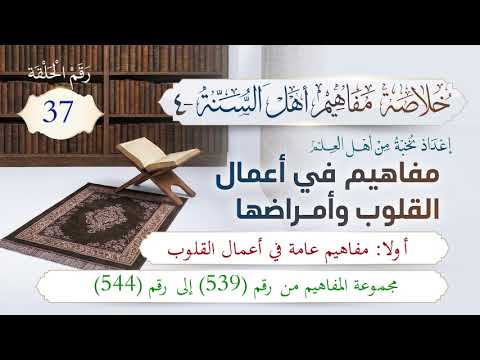
The lesson explains the difference between inner acts of the heart, such as sincerity, reliance on Allah, fear, hope and love, and diseases of the heart, such as envy and showing off. It stresses that the soundness of outward deeds depends on the soundness of the inner heart. It also covers the effects of sins and acts of obedience on the heart, and the sheikh's warning about excesses of some Sufis regarding contentment, love, reliance and asceticism. It is part of the series on the concepts of Ahl as-Sunnah.
Key takeaways
Acts of the heart are inner acts of worship such as sincerity, reliance on Allah, fear, hope and love, while diseases of the heart include envy, rancor, hatred and showing off.
Outward deeds are tied to the heart: an act done for show is not accepted, as the sheikh illustrates with charity and prayer.
The sheikh cites the hadith "Indeed, in the body there is a piece of flesh..." to show that when the heart is sound the whole body is sound.
Outward sins bring darkness, confusion, weakness, rust and humiliation to the heart, while acts of obedience bring light and tranquillity.
Lowering the gaze from what is forbidden gathers the heart upon love of Allah, clothes it with light and protects it from Satan's whispers.
The sheikh warns against excesses of some Sufis regarding contentment, love, reliance on Allah and asceticism, which went beyond the Book and the Sunnah.
The required goal is that a person attains both the worship of the limbs and the worship of the heart, with the outward matching and arising from the inward.
Questions & answers
What are the deeds of the heart and the diseases of the heart?
The lesson explains that the deeds of the heart are inner acts of obedience arising from the heart, such as sincerity, reliance on Allah, fear, hope and love, while the inner sins of the heart are called diseases of the heart, such as envy, rancor, hatred and showing off.
Do the heart's deeds affect the validity of outward worship?
Yes. The sheikh explains that outward deeds are closely linked to inner deeds, so outward actions are neither valid nor beneficial unless the inner deeds of the heart are sound, and he cites that prayer and zakat done for show are invalid.
How do sins affect the heart according to the lesson?
The sheikh says sins bring darkness and confusion to the heart, weakness and humiliation, rust and sealing, loss of ghayra and modesty, and then estrangement between the servant and his Lord, and they harden and kill the heart.
What is the benefit of lowering the gaze according to the sheikh?
He explains that lowering the gaze gathers the heart upon love of Allah, clothes it with light, strengthens insight, courage and firmness, and protects it from Satan's arrows that enter with a forbidden glance.
Auto-generated from the lesson transcript; the lesson itself is the reference.
Qur’an verses cited in this lesson
Al-Baqarah 2:183 — O ye who believe! Fasting is prescribed for you, even as it was prescribed for those before you, that ye may ward off (evil);
Al-Baqarah 2:264 — O ye who believe! Render not vain your almsgiving by reproach and injury, like him who spendeth his wealth only to be seen of men and believeth not in Allah and the Last Day. His likeness is as the likeness of a rock whereon is dust of earth; a rainstorm smiteth it, leaving it smooth and bare. They have no control of aught of that which they have gained. Allah guideth not the disbelieving folk.
Al-Hajj 22:46 — Have they not travelled in the land, and have they hearts wherewith to feel and ears wherewith to hear? For indeed it is not the eyes that grow blind, but it is the hearts, which are within the bosoms, that grow blind.
An-Nur 24:30 — Tell the believing men to lower their gaze and be modest. That is purer for them. Lo! Allah is aware of what they do.
An-Nur 24:35 — Allah is the Light of the heavens and the earth. The similitude of His light is as a niche wherein is a lamp. The lamp is in a glass. The glass is as it were a shining star. (This lamp is) kindled from a blessed tree, an olive neither of the East nor of the West, whose oil would almost glow forth (of itself) though no fire touched it. Light upon light. Allah guideth unto His light whom He will. And Allah speaketh to mankind in allegories, for Allah is Knower of all things.
Al-Mutaffifin 83:14 — Nay, but that which they have earned is rust upon their hearts.
Verses are matched automatically against the Qur’an text; some mentions may be missed. English: Pickthall.
Transcript
Machine translation — may contain errors
0:00A summary of the concepts held by the Ahl al-Sunnah.
0:08Regarding the actions of the heart and their ailments.
0:11The term "actions of the heart" refers to the inward acts of obedience,
0:17which originate from the heart,
0:19such as sincerity and reliance upon Allah,
0:21as well as fear, hope, and love,
0:24and other similar states.
0:26Conversely, the inward sins that stem from the heart
0:30are termed "ailments of the heart,"
0:33such as envy and malice,
0:35hatred and showing off (riya'),
0:37and other similar states.
0:39The impact of inward heart actions on outward physical actions.
0:44The actions of the limbs are linked
0:48to the inward actions of the heart by a firm bond.
0:52Outward actions are neither valid nor beneficial
0:55unless the inward actions of the heart are sound.
0:58For instance, prayer performed for show is corrupt,
1:01and zakat given for show is likewise invalid, as Allah the Almighty says:
1:07“O ye who believe! Render not vain your almsgiving by reproach and injury, like him who spendeth his wealth only to be seen of men and believeth not in Allah and the Last Day. His likeness is as the likeness of a rock whereon is dust of earth; a rainstorm smiteth it, leaving it smooth and bare. They have no control of aught of that which they have gained. Allah guideth not the disbelieving folk.” (2:264)
1:13"Like one who spends his wealth to be seen by the people."
1:18Therefore, the actions of the heart and the rectification of one's inner self are more obligatory upon the servant than the actions of the limbs,
1:25though both are required; for when the heart is sound, the outward actions are sound, and when it is corrupt, they are corrupt.
1:32The Prophet, peace and blessings of Allah be upon him, said:
1:35"Verily, there is a piece of flesh in the body; if it is sound, the whole body is sound,
1:40and if it is corrupt, the whole body is corrupt.
1:44Verily, it is the heart."
1:46Agreed upon.
1:48Can the reality of the true believer be distinguished from the hypocrite
1:52except by the actions and states within each of their hearts?
1:57The hearts are the focus of Allah the Almighty’s gaze,
2:01as the Prophet, peace be upon him, said:
2:04"Allah does not look at your appearances or your wealth,
2:08but He looks at your hearts and your deeds."
2:12Narrated by Muslim.
2:14Exalted is He to whom the secret is as the manifest,
2:18and to whom the hidden depths of the hearts are plain.
2:21In conclusion,
2:23what is required is for a person to strive to fulfill both the servitude of the limbs and the servitude of the heart,
2:31and for the outward to be consistent with and spring from the inward.
2:36This is what the salaf concerned themselves with,
2:40purifying their inner selves from impurities and ailments.
2:45The impact of outward physical actions on the heart and its inward states.
2:51Just as the actions of the heart have a profound effect on the actions of the limbs and their soundness,
2:57the actions of the limbs also have a tangible effect on the heart and its states.
3:04If these outward actions are acts of obedience,
3:08they positively influence the heart and its states.
3:12If they are acts of disobedience, they negatively influence the heart and its states.
3:18The impact of outward sins on the heart and its inward states.
3:24Sins committed by the limbs have dire consequences for the heart,
3:30among the most prominent of which are:
3:32First, darkness and confusion in the heart.
3:36Just as obedience is a light in the heart, disobedience is a darkness.
3:41The stronger and more frequent the disobedience,
3:44the greater the darkness and confusion, until the heart’s insight is extinguished.
3:50“Have they not travelled in the land, and have they hearts wherewith to feel and ears wherewith to hear? For indeed it is not the eyes that grow blind, but it is the hearts, which are within the bosoms, that grow blind.” (22:46)
3:59Second:
4:00The weakening of the heart and the humiliation of its possessor.
4:03Disobedience breeds humiliation, just as honor lies in the obedience of Allah the Almighty.
4:09Abdullah Ibn al-Mubarak once recited:
4:12"I have seen sins kill the hearts, and their persistence breeds humiliation;
4:18while abandoning sins is the life of the hearts, and it is better for your soul to disobey them."
4:24Third:
4:25Rust and a covering (ran) upon the heart.
4:28As Allah the Almighty says:
4:30“Nay, but that which they have earned is rust upon their hearts.” (83:14)
4:36The Prophet, peace be upon him, said:
4:39"When a believer commits a sin,
4:41a black spot appears on his heart.
4:44If he repents, desists, and seeks forgiveness,
4:47his heart is polished.
4:49But if he increases in sin, it increases."
4:51That is the 'ran' (covering) which Allah mentioned in His Book.
4:55Narrated by Ibn Majah and al-Tirmidhi,
4:57and graded hasan by al-Albani.
4:59Through this covering, the heart is sealed,
5:02so it neither recognizes good nor rejects evil,
5:06and Satan gains authority over its possessor.
5:10Fourth:
5:11The loss of the heart’s protective jealousy (ghirah) over the sanctities of Allah being violated.
5:16You see the sinner indifferent to the violation of Allah’s sanctities,
5:21or the fighting of His religion, or the affliction of the righteous.
5:25Fifth:
5:28The loss of modesty (haya') from the heart,
5:30so one feels no shame before Allah or before people,
5:33and openly commits sins.
5:36No one is unaware of the correlation between committing forbidden acts and the lack of modesty.
5:44The loss of the veneration and awe of Allah from the heart,
5:47until the sinner hides from people but treats the command of Allah with contempt.
5:52Then the matter leads to alienation between the servant and his Lord,
5:56and everyone who reminds him of Him from among the righteous.
5:59Seventh:
6:01When a person becomes alienated from Allah and the righteous,
6:05his heart falls ill and weakens, becoming unable to perform acts of obedience or ascend in the ranks of perfection,
6:11until he reaches the point of breaking, finding obedience burdensome, and eventually feeling aversion and hatred toward it.
6:18His heart no longer expands for obedience, nor does he feel distressed by sin.
6:23In sum, outward sins and their frequency harden the heart and cause it to die.
6:29The person furthest from Allah is the one with a hardened heart.
6:34The impact of outward acts of obedience on the heart and its inward states.
6:41The limbs are the gateways and frontiers of the heart.
6:46Whatever the limbs are employed in regarding acts of obedience serves to strengthen and support the heart,
6:53just as the strength of the frontiers contributes to the strength of a state’s capital and its authority.
6:59Is it hidden how prayer imparts to the heart contentment, tranquility, humility, and repentance?
7:06And is the effect of fasting on piety, sincerity, and certainty hidden?
7:11Allah the Almighty says:
7:13“O ye who believe! Fasting is prescribed for you, even as it was prescribed for those before you, that ye may ward off (evil);” (2:183)
7:22Likewise, the effect of Jihad in the path of Allah in fostering love for the Hereafter is not hidden,
7:28nor is the asceticism toward the world,
7:30the submission to Allah, and the steadfastness upon the truth.
7:34It suffices to demonstrate the effect of the limbs' obedience on the heart's actions
7:39to detail the effects of one specific act of obedience on the heart:
7:44the act of lowering the gaze from forbidden things.
7:48This produces the following:
7:50First, it focuses the heart on the love of Allah and finding comfort in Him,
7:55whereas letting the gaze wander causes the heart to be diverted from Allah and scattered,
8:01and creates alienation between the servant and his Lord.
8:04Second, it clothes the heart in light,
8:08just as letting it wander breeds darkness.
8:11This is why Allah first commanded the believing men and women to lower their gaze,
8:16as Allah the Almighty says:
8:18“Tell the believing men to lower their gaze and be modest. That is purer for them. Lo! Allah is aware of what they do.” (24:30)
8:22And He said: "And tell the believing women to lower their gaze."
8:27Then, after detailing that, He mentioned the Verse of Light:
8:31“Allah is the Light of the heavens and the earth. The similitude of His light is as a niche wherein is a lamp. The lamp is in a glass. The glass is as it were a shining star. (This lamp is) kindled from a blessed tree, an olive neither of the East nor of the West, whose oil would almost glow forth (of itself) though no fire touched it. Light upon light. Allah guideth unto His light whom He will. And Allah speaketh to mankind in allegories, for Allah is Knower of all things.” (24:35)
8:34"The example of His light is like a niche within which is a lamp;
8:38the lamp is within a glass..."
8:41“Allah is the Light of the heavens and the earth. The similitude of His light is as a niche wherein is a lamp. The lamp is in a glass. The glass is as it were a shining star. (This lamp is) kindled from a blessed tree, an olive neither of the East nor of the West, whose oil would almost glow forth (of itself) though no fire touched it. Light upon light. Allah guideth unto His light whom He will. And Allah speaketh to mankind in allegories, for Allah is Knower of all things.” (24:35)
8:49“Allah is the Light of the heavens and the earth. The similitude of His light is as a niche wherein is a lamp. The lamp is in a glass. The glass is as it were a shining star. (This lamp is) kindled from a blessed tree, an olive neither of the East nor of the West, whose oil would almost glow forth (of itself) though no fire touched it. Light upon light. Allah guideth unto His light whom He will. And Allah speaketh to mankind in allegories, for Allah is Knower of all things.” (24:35)
8:53“Allah is the Light of the heavens and the earth. The similitude of His light is as a niche wherein is a lamp. The lamp is in a glass. The glass is as it were a shining star. (This lamp is) kindled from a blessed tree, an olive neither of the East nor of the West, whose oil would almost glow forth (of itself) though no fire touched it. Light upon light. Allah guideth unto His light whom He will. And Allah speaketh to mankind in allegories, for Allah is Knower of all things.” (24:35)
8:58"...light upon light."
9:00"Allah guides to His light whom He wills."
9:04"And Allah presents examples for the people,"
9:07"and Allah is Knowing of all things."
9:10This indicates that the light of the person who lowers his gaze
9:14is derived from the light of Allah the Almighty and His guidance.
9:18Through this light, guidance is attained,
9:21and innovations and misguidance are prevented.
9:24Third, lowering the gaze strengthens the heart and gladdens it,
9:29and imparts to it the true insight (firasa) by which one distinguishes
9:33between truth and falsehood, and the truthful and the liar.
9:37Fourth, it imparts to the heart steadfastness, courage, and strength,
9:44so Allah combines for him the authority of insight and argument
9:48with the authority of capability and power.
9:51Fifth, it frees the heart to reflect on its interests and occupy itself with them,
9:57instead of the wandering gaze diverting it from all of that
10:01and causing it to fall into heedlessness.
10:04Sixth and finally,
10:06lowering the gaze protects the heart from the poisoned arrows of Iblis directed at it.
10:12Satan enters the heart with his whispers through the forbidden glance,
10:17and penetrates it faster than air penetrates an empty space,
10:22presenting the viewed image to him,
10:25beautifying it in his mind,
10:28and making promises and false hopes to him,
10:30inflaming his heart with it and distracting him from acts of obedience.
10:35The extremism of the Sufis regarding the actions of the heart.
10:41Just as the righteous salaf, may Allah be pleased with them, concerned themselves with the hearts, their actions, and their states,
10:47the Sufis also concerned themselves with this.
10:50However, they exaggerated to a degree that exceeded the boundaries of the Book and the Sunnah
10:56in describing and detailing the actions of the heart.
11:00They went to extremes in that field and went astray while intending guidance.
11:06You can hardly find an action of the heart
11:10but that they have some misguidance or deviation regarding it.
11:13Among these is, first, their misguidance regarding contentment (rida),
11:18where they exceeded the limit in being content with the decree and predestination of Allah,
11:22confusing Allah’s universal will with His legislative will.
11:27They believed it was obligatory to be content with disbelief, immorality, and disobedience,
11:31arguing that if contentment with them were not required, they would not have occurred in the universe.
11:37Thus, they fell into pure determinism (jabr),
11:40under the cover of exaggerated and ambiguous expressions,
11:45such as "witnessing the universal reality,"
11:48and "gaining insight into the secret of Allah in the decree."
11:51Second, their misguidance regarding the love of Allah,
11:56where their veneration of it led them to despise both fear and hope—
12:02I mean the fear of Allah the Almighty and His punishment,
12:05and the hope for His Paradise and reward.
12:08They considered these the weakest stations of those traveling to Allah,
12:12and claimed that the worship of Allah should be for His Essence alone,
12:17not out of greed for His Paradise nor fear of His Fire.
12:21They made the pinnacle of love to be "annihilation in the Beloved" (fana'),
12:25which they believe is exclusive to the allies (awliya') of Allah,
12:29and they consider their station to be higher than the station of the Prophets.
12:33Because of this misguidance of theirs regarding love,
12:37the salaf said of them:
12:39"Whoever worships Allah through love alone is a heretic (zindiq)."
12:43The correct way is to worship Allah
12:46through a combination of love, fear, and hope.
12:50Third, their misguidance regarding reliance upon Allah (tawakkul),
12:54where they turned reliance into cheap laziness and begging,
12:59and intentionally caused harm to themselves
13:02by abandoning the prescribed means and supplication,
13:06which is the greatest of worship and its essence.
13:09Furthermore, they were heedless of the greatest degree of reliance,
13:13which is reliance upon Allah in establishing His religion,
13:17striving in His path,
13:19and resisting disbelief and corruption,
13:21as was the reliance of the Prophets, peace be upon them.
13:25Fourth, their misguidance regarding asceticism (zuhd),
13:29where they removed it from being a positive inward heart action
13:33to a negative outward manifestation,
13:35through which they forbade themselves the good things of provision,
13:38just as they forbade the seeking of knowledge,
13:40claiming that whoever occupies himself with it has the "Shari'ah,"
13:44whereas they possess the "Truth" (haqiqa),
13:47because knowledge leads to people esteeming the scholar
13:51and distracts from total focus on Allah,
13:54and this contradicts asceticism.
13:56Thus, they made asceticism synonymous with poverty and ignorance,