budoorzahera launched in 2026 to carry the light of knowledge to every heart, in every language. Every lesson is available in the original audio with a full synced transcript, translated into fifteen other languages, with translated-audio listening available for a number of them.
You can copy any line of the transcript while listening, download the full text in multiple formats (TXT · SRT · VTT), or share a lesson with someone you care about in one tap. We ask God to make this work beneficial.
4192audio lessons
59complete series
16world languages
Error log
An automatic log of the most recent errors the app ran into on your device — copying and sending it to us helps a lot when troubleshooting a problem.
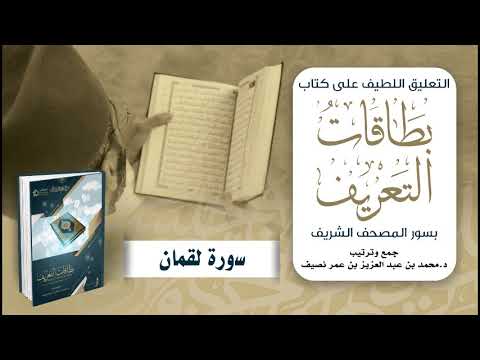
In this episode of the series Al-Ta'liq al-Latif, Dr. Muhammad Nusayf presents three reflections on Surah Luqman: on the name of the surah and Luqman, whose prophethood is disputed and is most commonly held not to be a prophet; on the surah's revelation history and what Qur'an-with-Qur'an and Sunnah interpretation reveals about it; and on the surah's theme, guidance through the Book of Allah, including why the scholars' interpretation of 'idle talk' as singing fits the surah's context. The sheikh presents these matters as topics of study and reflection, not as definitive rulings.
Key takeaways
Reflection on the surah's name after Luqman, whose prophethood is disputed and most commonly held not to be a prophet, with a note that righteousness can elevate a person in spiritual standing.
The sheikh explains that prophethood cannot be attained through effort, while the rank of siddiqiyyah and what follows it is attained through striving.
Revelation context and chronology can sometimes be recognized by interpreting one verse through another, as shown by Ibn Mas'ud's report of Luqman's words to his son.
Interpreting the Qur'an by the Qur'an, and by the Sunnah, can reveal aspects of the order and context of revelation.
The surah's theme is the necessity of being guided by the wise Book of Allah and benefiting from hearing it.
The verse 'And of the people is one who purchases idle talk' fits the surah's context; most of the early scholars, including Ibn Mas'ud and Ibn 'Abbas, interpreted it as singing, while the sheikh notes that the evidences for prohibiting singing are numerous.
Caution against attributing to verses what they do not bear, and approaching ijtihadi questions in a spirit of study.
Questions & answers
Why is the surah named Luqman?
Because it mentions Luqman. The sheikh notes that Luqman's prophethood is disputed and that the more well-known view is that he was not a prophet, and he presents this as a matter for study and reflection rather than a firm ruling.
Was part of Surah Luqman revealed before Surah Al-An'am?
The sheikh says that part of this surah is established as having been revealed before a verse in Surah Al-An'am. He cites the hadith of Ibn Mas'ud (may Allah be pleased with him) about the Prophet ﷺ mentioning Luqman's words to his son: 'Indeed, associating others with Allah is a great injustice.'
What is meant by 'idle talk' in Surah Luqman?
The sheikh explains that most of the early scholars, including Ibn Mas'ud and Ibn 'Abbas (may Allah be pleased with them), interpreted it as singing, and that this fits the surah's context, which encourages being guided by the Qur'an and warns against being occupied with other things.
What is the main theme of Surah Luqman?
The sheikh considers the surah's theme to be the necessity of being guided by the wise Book of Allah, eagerly hearing it, and benefiting from it, while warning against turning away from it.
Auto-generated from the lesson transcript; the lesson itself is the reference.
Qur’an verses cited in this lesson
An-Nisa 4:69 — Whoso obeyeth Allah and the messenger, they are with those unto whom Allah hath shown favour, of the prophets and the saints and the martyrs and the righteous. The best of company are they!
Al-Ma'idah 5:24 — They said: O Moses! We will never enter (the land) while they are in it. So go thou and thy Lord and fight! We will sit here.
Al-An'am 6:82 — Those who believe and obscure not their belief by wrongdoing, theirs is safety; and they are rightly guided.
Az-Zumar 39:23 — Allah hath (now) revealed the fairest of statements, a Scripture consistent, (wherein promises of reward are) paired (with threats of punishment), whereat doth creep the flesh of those who fear their Lord, so that their flesh and their hearts soften to Allah's reminder. Such is Allah's guidance, wherewith He guideth whom He will. And him whom Allah sendeth astray, for him there is no guide.
Verses are matched automatically against the Qur’an text; some mentions may be missed. English: Pickthall.
Transcript
Machine translation — may contain errors
0:00In the name of Allah, the Entirely Merciful, the Especially Merciful.
0:30The gracious commentary
0:32on the book "Identification Cards
0:35for the Surahs of the Noble Qur'an"
0:38by Dr. Muhammad ibn 'Abd al-'Aziz ibn 'Umar Nasif,
0:42may Allah preserve him.
0:44Surah Luqman.
0:46In the name of Allah, the Entirely Merciful, the Especially Merciful.
0:48Praise be to Allah, and peace and blessings be upon the Messenger of Allah.
0:53We continue with our gracious commentary on the identification cards,
0:55focusing on Surah Luqman.
0:57I would like to make three brief observations regarding it.
0:59The first observation concerns the name of the surah.
1:01Although its name shares a common feature with other surahs
1:05in being the name of a man,
1:07the crucial difference between it
1:09and those other surahs
1:11is that this individual's
1:13status as a prophet is disputed,
1:15and the more renowned opinion is that he was not a prophet.
1:17This contrasts with the other men
1:19after whom surahs were named.
1:22Does this not draw our attention to something
1:24whose corroboration is found in
1:26the words of Allah the Exalted: "And whoever obeys Allah [and the Messenger—they will be with those]
1:28“Whoso obeyeth Allah and the messenger, they are with those unto whom Allah hath shown favour, of the prophets and the saints and the martyrs and the righteous. The best of company are they!” (4:69)
1:30upon whom Allah has bestowed favor: the prophets,
1:32the steadfast affirmers of truth,
1:34the martyrs, and the righteous"?
1:37Prophethood
1:39cannot be attained through personal exertion,
1:41whereas the rank of the steadfast affirmers of truth and the degrees below it
1:43are realms wherein a person expends
1:45every effort to attain them.
1:47So I say—and this is a subject
1:49for mutual study and contemplation:
1:51Does naming a surah
1:53after Luqman, who was not a prophet
1:55according to the more sound view,
1:57remind us that one may ascend
1:59to immense spiritual heights, even though
2:01one cannot reach the station of prophethood?
2:03The station of prophethood is truly magnificent,
2:06yet it remains beyond our reach.
2:08So might this surah
2:10serve as a means
2:12to bring him closer to our reach, or
2:14should we elevate his status because the righteous
2:16are companions to the prophets?
2:18Indeed, Luqman accompanied
2:20in a spiritual sense
2:22those very prophets by having his name become
2:24the title of a surah in the Qur'an.
2:26I present this issue purely as
2:28a matter of reflection, rather than
2:30an assertion of definitive certainty.
2:32It is merely an attempt on my part
2:34to indicate that
2:36in the names of surahs, as in other matters,
2:38there is ample room for scholarly reflection and contemplation.
2:40The second observation
2:42concerns the dating and chronological context of the surah.
2:44It has been authentically established
2:46that parts of this surah were revealed before
2:48the verse in Surah al-An'am.
2:50For on the authority of 'Abdullah ibn Mas'ud,
2:52may Allah be pleased with him: when this verse was revealed,
2:54“Those who believe and obscure not their belief by wrongdoing, theirs is safety; and they are rightly guided.” (6:82)
2:56"[...and did not obscure] their faith with wrongdoing,"
2:59it weighed heavily on the Companions of the Messenger of Allah,
3:01peace and blessings of Allah be upon him, and they asked:
3:03"Which of us has not obscured his faith with wrongdoing?"
3:05Thereupon the Messenger of Allah, peace be upon him, said:
3:07"It is not as you think.
3:09Have you not heard the words of Luqman
3:11to his son: 'Indeed, associating partners with Allah is a tremendous wrongdoing'?"
3:13And this
3:15makes us realize that
3:17the chronology of revelation can sometimes be deduced
3:19from unexpected sources.
3:21A mere interpretation of one verse by another
3:23can reveal to us
3:25that one verse preceded another, just as
3:27is the case here. I would also mention another example:
3:29Surah al-Ma'idah
3:31is widely held to have been revealed quite late,
3:33yet it contains verses mentioned
3:35before the Battle of Badr,
3:37within the discourse of the Companions with the Prophet,
3:39peace be upon him,
3:41“They said: O Moses! We will never enter (the land) while they are in it. So go thou and thy Lord and fight! We will sit here.” (5:24)
3:43which occurred in that account.
3:45Thus, the main point is that
3:47interpreting the Qur'an by the Qur'an,
3:49or rather, interpreting the Qur'an by the Sunnah,
3:51sheds light on aspects of
3:53the chronology of revelation.
3:55The third and final observation
3:57is that the central theme of the surah
3:59is the vital necessity of seeking guidance
4:01through the Wise Book of Allah.
4:03We notice that
4:05it is stated in the surah:
4:07"And of the people is he who buys the amusement of speech
4:09to mislead from the way of Allah..."
4:12And the vast majority of the salaf (early generations),
4:14including our masters
4:16'Abdullah ibn Mas'ud
4:18and 'Abdullah ibn 'Abbas,
4:20may Allah be pleased with them,
4:22interpreted this verse
4:24as referring to singing.
4:26Certain contemporary thinkers have taken issue with this view.
4:28I do not wish
4:30to dwell at great length on this,
4:32but I want to emphasize that this verse aligns impeccably with the context.
4:34Interpreting the verse as referring to singing
4:36is exceptionally appropriate to the textual flow.
4:38For this reason, Ibn Kathir commented
4:40on these verses, saying regarding "And of the people...":
4:42He said:
4:44"When Allah the Exalted mentioned the state of the felicitous—
4:46who are guided by the Book of Allah
4:48and derive benefit from listening to it,
4:50just as Allah the Exalted stated:
4:52“Allah hath (now) revealed the fairest of statements, a Scripture consistent, (wherein promises of reward are) paired (with threats of punishment), whereat doth creep the flesh of those who fear their Lord, so that their flesh and their hearts soften to Allah's reminder. Such is Allah's guidance, wherewith He guideth whom He will. And him whom Allah sendeth astray, for him there is no guide.” (39:23)
4:54'[Allah has sent down the best statement: a consistent Book wherein is reiteration.] The skins of those who fear their Lord shiver therefrom,
4:56then their skins and their hearts soften
4:58to the remembrance of Allah.
5:00That is the guidance of Allah by which He guides whom He wills,
5:02“Allah hath (now) revealed the fairest of statements, a Scripture consistent, (wherein promises of reward are) paired (with threats of punishment), whereat doth creep the flesh of those who fear their Lord, so that their flesh and their hearts soften to Allah's reminder. Such is Allah's guidance, wherewith He guideth whom He will. And him whom Allah sendeth astray, for him there is no guide.” (39:23)
5:04and one whom Allah sends astray has no guide'—He coupled it with the mention
5:06of the state of the wretched,
5:08who turn away from benefiting
5:10from listening to the speech of Allah,
5:12turning instead to listen to
5:14musical pipes and song
5:16accompanied by melodies and musical instruments,
5:18as Ibn Mas'ud stated
5:21regarding the words of the Exalted: 'And of the people is he who buys
5:23the amusement of speech.' He said: 'By Allah, it is
5:25singing!'—to the end of his narration."
5:27The point to take note of in this correlation
5:29is that the surah speaks of the Qur'an,
5:31and issues a warning
5:33regarding whoever is preoccupied with anything besides the Qur'an.
5:35We do not claim that this
5:37verse is the sole proof
5:39for the prohibition of singing,
5:41for the proofs prohibiting singing are numerous.
5:43Rather, the statements of the salaf (early generations) came
5:45as if drawing attention
5:47to the inclusion of
5:49this particular practice within the general scope of
5:51the matter; otherwise, the issue of
5:53the prohibition of singing was already firmly established among them.
5:55And Allah knows best.
5:57With this, we bring to a close
5:59these three observations. I ask Allah
6:01to benefit us through the Magnificent Qur'an,
6:03and to make it an argument in our favor
6:05and not an argument against us.
6:07May Allah send blessings upon Muhammad and upon his family and Companions,