budoorzahera launched in 2026 to carry the light of knowledge to every heart, in every language. Every lesson is available in the original audio with a full synced transcript, translated into fifteen other languages, with translated-audio listening available for a number of them.
You can copy any line of the transcript while listening, download the full text in multiple formats (TXT · SRT · VTT), or share a lesson with someone you care about in one tap. We ask God to make this work beneficial.
4192audio lessons
59complete series
16world languages
Error log
An automatic log of the most recent errors the app ran into on your device — copying and sending it to us helps a lot when troubleshooting a problem.
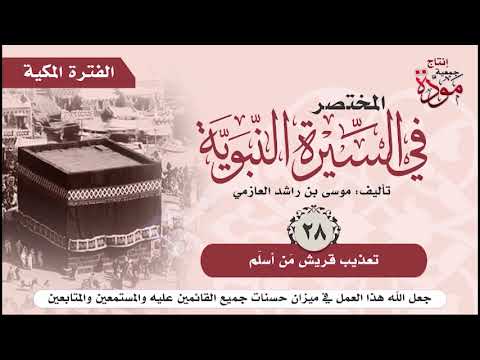
This lesson describes the suffering endured by the early Muslims at the hands of the Quraysh when they embraced Islam and followed the Prophet ﷺ. Each tribe pressured those among them who had converted, imprisoning and torturing them with beating, hunger, thirst, and the scorching sand of Makkah. The sheikh explains that the Prophet ﷺ was protected by his uncle Abu Talib, and that Abu Bakr was protected by his people, while the weaker Muslims suffered severe harm. The lesson also narrates the story of Ammar ibn Yasir ﷺ and the revelation about one who is compelled to disbelieve while his heart remains firm in faith.
Key takeaways
The Prophet ﷺ persisted in calling to Allah night and day, openly and in secret, and nothing could turn him away.
The call included free and slave, weak and strong, rich and poor, all being equal in it.
Allah protected His Messenger ﷺ through his uncle Abu Talib, given his noble standing among the Quraysh.
The patience of weaker Companions such as Bilal ﷺ, who held his own life cheap for the sake of Allah.
The concession for speech under compulsion while the heart remains firm in faith, as in the case of Ammar ﷺ.
The principle derived from the verse: except one who is forced while his heart is content with faith.
Questions & answers
What did the early Muslims suffer at the hands of the Quraysh?
The lesson states that the Quraysh imprisoned and tortured converts with beating, hunger, thirst, and the scorching sand of Makkah, and tried to turn the weak away from their religion.
Why was the Prophet ﷺ not harmed severely?
The sheikh explains that Allah protected His Messenger ﷺ through his uncle Abu Talib, who was a noble and respected leader among the Quraysh.
What is the story of Ammar ibn Yasir ﷺ?
The polytheists seized him and did not release him until he cursed the Prophet ﷺ and praised their gods. When the Prophet ﷺ asked about his heart, he said it was content with faith, and the Prophet ﷺ said: if they return, then return. The verse about one forced to disbelieve while his heart remains firm in faith was revealed regarding him.
Is one who is forced to utter disbelief held accountable?
The sheikh cites Ibn Rajab that scholars agree that compulsion in speech is valid, and that one forced to utter a forbidden statement bears no sin, provided his heart remains firm in faith.
Auto-generated from the lesson transcript; the lesson itself is the reference.
Qur’an verses cited in this lesson
An-Nahl 16:106 — Whoso disbelieveth in Allah after his belief - save him who is forced thereto and whose heart is still content with the Faith - but whoso findeth ease in disbelief: On them is wrath from Allah. Theirs will be an awful doom.
Verses are matched automatically against the Qur’an text; some mentions may be missed. English: Pickthall.
Transcript
Machine translation — may contain errors
0:00In the name of Allah, the Most Gracious, the Most Merciful.
0:03Muhammad is the Messenger of Allah.
0:12A Summary of the Prophetic biography (Seerah).
0:20The Quraysh's persecution of those who embraced Islam.
0:25The Messenger of Allah, peace and blessings of Allah be upon him, continued to call people to Allah the Exalted, night and day.
0:31Both privately and publicly.
0:33Nothing could distract him from this.
0:36No one could turn him back from it.
0:39No one could hinder him from it.
0:42He would follow people in their social gatherings, assemblies, and forums.
0:46And during the pilgrimage seasons and stations of Hajj.
0:49He would call everyone he met, whether free or enslaved, weak or strong, rich or poor.
0:56All of creation was equal in his sight regarding this call.
1:00Yet, the powerful and harsh among the polytheists of Quraysh turned against him and those who followed him from among the common, weak people.
1:06They subjected them to both verbal and physical abuse.
1:12Ibn Ishaq said:
1:14Then, they turned against those who had embraced Islam and followed the Messenger of Allah, peace be upon him, from among his Companions.
1:21Every tribe rose up against the believers within their own ranks.
1:26They began to imprison them and torture them with beatings, hunger, and thirst.
1:31And by exposing them to the scorching heat of the Meccan desert when the sun was at its peak.
1:34They sought to tempt those among them who were weak away from their religion.
1:38Some were indeed swayed by the intensity of the trials they faced.
1:42Others remained steadfast, and Allah protected them from the polytheists.
1:47Imam Ibn al-Qayyim said:
1:49Allah protected His Messenger, peace be upon him, through his uncle Abu Talib.
1:54Because he was a noble and highly respected figure among the Quraysh.
1:58And was obeyed by the people of Mecca.
2:00They did not dare to openly confront him with any harm.
2:05It was among the wisdom of the Wisest of Judges that he remained upon the religion of his people.
2:10Due to the benefits that become apparent to those who contemplate them.
2:15As for his Companions, may Allah be pleased with them:
2:18Whoever had a clan to protect him was shielded by his kin.
2:23But the rest were subjected to harm and torture.
2:27Imam Ahmad and Ibn Majah narrated with a hasan (sound) chain of transmission:
2:31On the authority of Abdullah Ibn Mas'ud, may Allah be pleased with him, who said:
2:35The first to openly declare their Islam were seven people:
2:38The Messenger of Allah, peace be upon him.
2:41Abu Bakr, Ammar, and his mother Sumayyah.
2:46Suhayb, Bilal, and al-Miqdad.
2:50As for the Messenger of Allah, peace be upon him,
2:53Allah protected him through his uncle Abu Talib.
2:56As for Abu Bakr, Allah protected him through his people.
3:01As for the others, the polytheists seized them.
3:04They dressed them in iron armor and scorched them in the sun.
3:09Every one of them yielded to what the polytheists wanted,
3:14Except for Bilal, for he considered his own life insignificant for the sake of Allah.
3:19And he was considered insignificant by his people, so they took him and handed him over to the children.
3:23They began to drag him through the mountain passes of Mecca.
3:27While he kept saying, "One, One!" (referring to Allah).
3:31Imam al-Bukhari narrated in his Sahih:
3:33On the authority of Sa'id Ibn Zayd, may Allah be pleased with him, who said:
3:37By Allah, I have seen myself being bound by Umar for the sake of Islam,
3:42Before Umar himself embraced Islam.
3:44Imam al-Tirmidhi narrated in his Jami' with a sahih (authentic) chain:
3:48On the authority of Harithah Ibn Mudhrib, who said:
3:51I visited Khabbab, may Allah be pleased with him,
3:54And he had been cauterized on his stomach.
3:57He said, "I do not know anyone among the Companions of the Prophet, peace be upon him,
4:02Who faced as much trial as I did.
4:05There was a time when I did not even possess a single dirham during the era of the Messenger of Allah, peace be upon him."
4:12Al-Hakim narrated in al-Mustadrak,
4:14With a hasan chain through its various paths and supporting narrations,
4:17On the authority of Abu Ubaydah Ibn Muhammad Ibn Ammar Ibn Yasir,
4:21From his father, who said:
4:23The polytheists seized Ammar Ibn Yasir.
4:26They did not let him go until he insulted the Prophet, peace be upon him,
4:31And spoke well of their idols.
4:33Then they released him.
4:35When he came to the Messenger of Allah, peace be upon him,
4:39He asked, "What is behind you?" (What happened?)
4:42He replied, "Evil, O Messenger of Allah.
4:45They did not let me go until I insulted you,
4:47And spoke well of their idols."
4:50He asked, "How do you find your heart?"
4:53He replied, "Tranquil with faith."
4:56The Messenger of Allah, peace be upon him, said,
4:59"If they return, then you return (to what you said)."
5:01And regarding Ammar Ibn Yasir, may Allah be pleased with him, the following verse was revealed:
5:06“Whoso disbelieveth in Allah after his belief - save him who is forced thereto and whose heart is still content with the Faith - but whoso findeth ease in disbelief: On them is wrath from Allah. Theirs will be an awful doom.” (16:106)
5:11"Except for one who is forced [to renounce his faith]
5:15While his heart is tranquil with faith."
5:21“Whoso disbelieveth in Allah after his belief - save him who is forced thereto and whose heart is still content with the Faith - but whoso findeth ease in disbelief: On them is wrath from Allah. Theirs will be an awful doom.” (16:106)
5:25“Whoso disbelieveth in Allah after his belief - save him who is forced thereto and whose heart is still content with the Faith - but whoso findeth ease in disbelief: On them is wrath from Allah. Theirs will be an awful doom.” (16:106)
5:31"And for them is a great punishment."
5:34Al-Hafiz said in al-Fath:
5:36It is well-known that the aforementioned verse
5:39Was revealed concerning Ammar Ibn Yasir, may Allah be pleased with him.
5:43Al-Hafiz Ibn Rajab said:
5:45As for being coerced into speech,
5:48The scholars are in agreement regarding its validity (in such a state).
5:50And that whoever is forced to utter a forbidden statement,
5:53Under recognized coercion,
5:55It is permissible for him to ransom his life with it.
5:57And there is no sin upon him.
5:59This is indicated by the words of Allah the Exalted:
6:02“Whoso disbelieveth in Allah after his belief - save him who is forced thereto and whose heart is still content with the Faith - but whoso findeth ease in disbelief: On them is wrath from Allah. Theirs will be an awful doom.” (16:106)
6:07And the Prophet, peace be upon him, said
6:10To Ammar, may Allah be pleased with him:
6:12"If they return, then you return."
6:14The polytheists had tortured him
6:16Until he agreed with them on what they wanted of disbelief.
6:20So he did so.
6:23A Summary of the Prophetic biography (Seerah).
6:28Authored by Sheikh Musa bin Rashid al-Azimi.
6:33Presented by the Mawaddah Association.
6:36In the Kingdom of Bahrain.
6:44By some of them:
6:46The longing for you has no bounds.
6:53May Allah send blessings upon you as long as the call to prayer is raised.
7:00And as long as you move with the remnants of the righteous.